The ‘Useless’ Knowledge

24th April 2020. Britain just passed the peak. A live broadcast from Downing Street shows an increase of over 5,500 cases of COVID-19 in 24 hours. It is lower than earlier in the week and there are more good news. The PM has made a full recovery from his encounter with the virus and he is now expected back in the swing of things.

Analysing newspapers’ front pages from 24th April 2020, I find headlines suggesting how a ‘grateful Britain’ (Daily Mirror) is slowly ‘taking back control’ (The Daily Telegraph), with the help of ‘mass testing to get Britain back on her feet’ (Daily Express).  At the same time, hospitals are struggling with significant PPE shortages, with ‘failings in the privately run virus test centres’ (The Guardian) and are ‘running out of dialysis kits’ (The Independent).

A snapshot of the ‘new normal’ (The Scotsman) in April, when things are bad and better at the same time. The sigh of relief from governmental departments is so loud, I can almost hear it from the Midlands in the lockdown quietness.

Weather is good, but the angst caused by the ’emergency stop on economy’ is wearing many out. As my professional and social life move online, days and nights blend into each other, in a confusing melange of obsessive handwashing, sleeplessness, overeating and virus paranoia. I would believe anything as long as it brings hope.

The worst has passed and social media takes comfort in the heavily quoted words of Pastor Olawale Daniel who prophetically anticipates the arrival of ‘a time to go back to the drawing board and rewrite the next phase of our existence’.

I admit I have not heard of Pastor Olawale before the pandemic and, checking his website, I am still unable to trust the source but for a while his quote goes viral on social media. Maybe it speaks to a yearning for social change, in a moment when, having lockdown time for reflection, we realise that we have been going in the wrong direction.
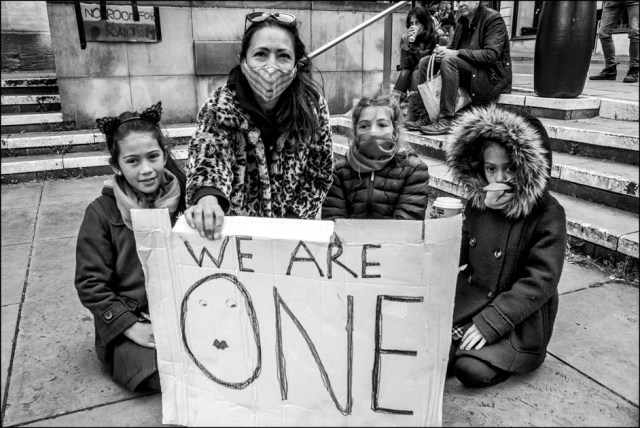
© JStadnicki, 2020 / Stroud / UK

25th May 2020. I’ve already been introduced to the science behind the R number. The press conference in Downing Street is chaired by the PM himself who announces an increase in number of COVID-19 cases with only 1,600 in 24 hours. Britain’s records show that 36,900 people died infected with COVID-19, but I’m re-assured that things are ‘being controlled’.

Unfortunately, trust in the government’s concerted narrative ‘together against the virus’ suffers a big blow following the Cummings-gate media revelations.

Newspapers’ front pages explain how the PM’s aide, ‘a cheat’ (Daily Mirror), offers ‘no apology, no explanation’ (The Guardian) for breaking the lockdown rules. While some newspapers report that ‘he acted responsibly, legally, and with integrity’ (The Daily Telegraph), others call for the ‘aide’s sacking’ (The Scotsman) and the public opinion begins to split, reigniting the arguments which fuel the narrative ‘them and us’. My professional and social life are still booming online, weather is good, and then something else happens.

George Floyd is killed in Minneapolis at 9.07pm. Britain is asleep (3.07am) and about to wake up to an updated version of the ‘new normal’; a social normality forced back to the ‘drawing board’ by the inequality and the injustice which stained our system before the COVID-19 pandemic, and our systems before that, and even earlier than that, as back as history can remember.
7th June 2020. The statue of Edward Colston is toppled and removed by protesters supporting the ‘George Floyd Movement’ in Bristol. The British Home Secretary points the finger at the destructive ‘mobsters’ and the House of Commons heats up with MPs recognising the urgent need to improve our education system. We have not learned enough from the past, nor thought enough about a future free from racism, discrimination and injustice. At this point, volume goes up in my headphones.

It is a mistake.  A mistake, for I can hear Sam Terry (MP for Ilford South) saying how UK universities must be:

valued as part of the frontline response to the coronavirus pandemic, […] and recognised for the role they can play in their local economies in terms of retraining and reskilling their local workers during any recovery from the pandemic. (2020, p.1)

The hope for fresh beginning in the ‘new normal’ gets crushed.  Shouldn’t universities be recognised for all their roles, for their contribution to developing critical thinking and creativity, science as well as arts and humanities? If not, then what is the point in having higher education in the first place?

With philosophy, literature and art courses being scrapped in many British universities, public libraries closing, an art sector barely surviving under the new rules of social distancing, our children’s chance to reflect on and to learn from past mistakes is significantly undermined. Not that economic recovery is irrelevant, far from it; but looking at the underlying societal disease caused by ‘outcomes’, it seems that we are moving backwards. Almost as back as 1935 when Bertrand Russell observed a similar symptomatic failure in the education system:

Educational commissions point out that fifteen hundred words are all that most people employ in business correspondence, and therefore suggest that all others should be avoided in the school curriculum. (1935, p.34)

Russell criticised the education system tasked to avoid ‘useless’ knowledge, without practical applicability and immediacy, pointing out the insurmountable value of philosophy and literature, for instance, in creating better visions for the future.

Surely in almost a century we moved beyond fifteen hundred words, surely our world-leading higher education system looks nothing like the system described by Russell in 1935:

Knowledge everywhere is coming to be regarded not as a good in itself, or a means of creating a broader and human outlook on life in general, but as merely an ingredient in technical skill. Educational establishments are not allowed to spend their money as they like, but must satisfy the State that they are serving a useful purpose by imparting skill and instilling loyalty. (In Praise of Idleness, 1935, p.38)

Writing In Praise of Idleness, Russell had the experience of the Great Depression. The Stock Market Crash followed in 1939. Despite his opposition to war, Russell witnessed how a social system, skilled by education, was unable to solve the crisis of the 20th century in any other way but war.

As for us, things are surely different.

© Maria Stadnicka, June 2020 / Published in International Times on 4th July 2020.


Russell, B. (1935) In Praise of Idleness. London: George Allen & Unwind Ltd. An e-version can be accessed here.

Furniture Without Memory


‘Interior MMXX’

ask about someone lost

in an escape gone wrong /


they will point at a place

of returning where things


talk themselves out of paper

so loudly it is impossible


to miss them even if you can

barely hear at all / peculiar how


eternal-now locks everything

indoors / before too long


hair grows in old toys

in furniture without memory


© Maria Stadnicka, 2020


Published in Stride Magazine, February 2020.

Somnia | Four Movements in F Minor

Billed as ‘Four Movements in F Minor’, Somnia is split into parts, ‘Allegro’, ‘Largo’, ‘Scherzo’ and ‘Finale’. The poems explore living through terrorism and fear, although these themes could be metaphorical or literal since the poems’ concerns focus on the effects on people living through these times. From ‘Allegro’, ‘Witness’ takes place a supermarket where ropes are on sale and shoppers talk about the pending hurricane,

Across the isle, a women looks out.

Trains deliver milk and morning newspapers;

at the end of his shift, a night watchman

lights a cigarette watching umbrellas running

to shelter. He has nowhere else. His children

sent him a blank telegram. Monochrome winds,

he thinks. Time to repair, to build.

The house he was born in no longer exists.

The punch of the last line carries a heft in contrast to the seemingly mundane routine of everyday lives. As others are hurrying home to shelter from adverse weather, the watchman has no one else to be concerned about him. In ‘Defence Mechanism’ from ‘Largo’, a questions throws a person,

I move

rubble pieces

across the chess table

unsure of what bishops,

rooks, pawns are for

in this game.


Would you kill a bird?

the angel asks.

A stone grows

in my mouth.

Between my flesh

and my heart,

                    rust.’

The poet is Romanian and lived through a political regime of a dictator, secret police and general paranoia where neighbour reported neighbour to save themselves form arrest. The question isn’t necessarily about a bird, but could you kill to save yourself? Can you do what it takes to survive?

Somnia is accomplished and timely, built on acute observation and drawn without judgement. The poems focus on the darker sides of humanity, the intrusion on every day lives by the political forces and show solidarity with those simply trying to protect family and survive.

© Emma Lee for The Journal, 29 June 2020


Somnia (published on 6th April 2020 by Knives, Forks and Spoons Press) was included among ‘the best books to read during lockdown’ by The Telegraph Arts (May 2020). The book is available at Knives, Forks and SpoonsThe Poetry Book Society, WaterstonesAmazon and the following independent shops:

Banner Books (Ennistymon)
http://bannerbooks.ie

Book Corner (Saltburn-by-the-Sea)
bookcornershop.co.uk

The Bookshop (East Grinstead)
eastgrinsteadbookshop.co.uk

Brendon Books (Taunton)
brendonbooks.co.uk

Bridge Bookshop (Isle of Man)
bridge-bookshop.com

Browsers Bookshop (Porthmadog)
browsersbookshop.com

Gullivers Bookshop (Wimborne)
booksandvinyl.co.uk/gullivers

Gnash Comics
gnashcomics.co.uk

Gwisgo Bookworm (Aberearon)
gwisgobookworm.co.uk

Haslemere Bookshop (Haslemere)
haslemerebookshop.co.uk

Hungerford Bookshop (West Berkshire)
hungerfordbookshop.co.uk

Lindum Books (Lincoln)
facebook.com/lindumbooks

Mostly Books (Abingdon)
mostly-books.co.uk

Niche Comics and Bookshop (Cambridgeshire)
nichecomics.co.uk

Red Lion Books (Colchester)
redlionbooks.co.uk

Sam Read Bookseller (Grasmere)
samreadbooks.co.uk

Wivenhoe Bookshop (Essex)
wivenhoebooks.com

The Woodstock Bookshop
woodstockbookshop.co.uk

Until tomorrow / Free online reading 16th June, 7.30pm

Photograph: @John Stadnicki – MMXVIII

An opportunity to hear new work, as well as fragments from Somnia.

SOMNIA (front cover) published by The Knives Forks Spoons Press, April 2020.

Event organised by Gloucester Poetry Festival!

Registration and further information: here.

Thank you! Maria

Until tomorrow, you can listen to:


‘The Seventh Virtue’.


Note:
Latest book Somnia published this year by the Knives, Forks and Spoons Press was released on 6th April and can be ordered from the following independent bookshops:

Banner Books (Ennistymon)
http://bannerbooks.ie

Book Corner (Saltburn-by-the-Sea)
bookcornershop.co.uk

The Bookshop (East Grinstead)
eastgrinsteadbookshop.co.uk

Brendon Books (Taunton)
brendonbooks.co.uk

Bridge Bookshop (Isle of Man)
bridge-bookshop.com

Browsers Bookshop (Porthmadog)
browsersbookshop.com

Gullivers Bookshop (Wimborne)
booksandvinyl.co.uk/gullivers

Gnash Comics
gnashcomics.co.uk

Gwisgo Bookworm (Aberearon)
gwisgobookworm.co.uk

Haslemere Bookshop (Haslemere)
haslemerebookshop.co.uk

Hungerford Bookshop (West Berkshire)
hungerfordbookshop.co.uk

Lindum Books (Lincoln)
facebook.com/lindumbooks

Mostly Books (Abingdon)
mostly-books.co.uk

Niche Comics and Bookshop (Cambridgeshire)
nichecomics.co.uk

Red Lion Books (Colchester)
redlionbooks.co.uk

Sam Read Bookseller (Grasmere)
samreadbooks.co.uk

Wivenhoe Bookshop (Essex)
wivenhoebooks.com

The Woodstock Bookshop
woodstockbookshop.co.uk

Further information about her work, collaborations and reviews at http://www.mariastadnicka.com.

Join us on Zoom (you will need to register for a ticket in order to receive the pass-code):-

https://zoom.us/j/93290445542

Dial in to join by phone if you wish:-

+44 330 088 5830
+44 131 460 1196
+44 203 481 5237
+44 203 481 5240
+44 208 080 6591
+44 208 080 6592

Find your local number: https://zoom.us/u/aeg9xXpiad


15th June 2020

16 June, 7.30pm (UK time). Free event online!


An opportunity to hear new work as well as fragments from Somnia.

Event organised by Gloucester Poetry Festival!

Registration and further information: here.

Thank you!

Note:
Latest book Somnia published this year by the Knives, Forks and Spoons Press was released on 6th April and can be ordered from the following independent bookshops:

Banner Books (Ennistymon)
http://bannerbooks.ie

Book Corner (Saltburn-by-the-Sea)
bookcornershop.co.uk

The Bookshop (East Grinstead)
eastgrinsteadbookshop.co.uk

Brendon Books (Taunton)
brendonbooks.co.uk

Bridge Bookshop (Isle of Man)
bridge-bookshop.com

Browsers Bookshop (Porthmadog)
browsersbookshop.com

Gullivers Bookshop (Wimborne)
booksandvinyl.co.uk/gullivers

Gnash Comics
gnashcomics.co.uk

Gwisgo Bookworm (Aberearon)
gwisgobookworm.co.uk

Haslemere Bookshop (Haslemere)
haslemerebookshop.co.uk

Hungerford Bookshop (West Berkshire)
hungerfordbookshop.co.uk

Lindum Books (Lincoln)
facebook.com/lindumbooks

Mostly Books (Abingdon)
mostly-books.co.uk

Niche Comics and Bookshop (Cambridgeshire)
nichecomics.co.uk

Red Lion Books (Colchester)
redlionbooks.co.uk

Sam Read Bookseller (Grasmere)
samreadbooks.co.uk

Wivenhoe Bookshop (Essex)
wivenhoebooks.com

The Woodstock Bookshop
woodstockbookshop.co.uk

Further information about her work, collaborations and reviews at http://www.mariastadnicka.com.

Join us on Zoom (you will need to register for a ticket in order to receive the pass-code):-

https://zoom.us/j/93290445542

Dial in to join by phone if you wish:-

+44 330 088 5830
+44 131 460 1196
+44 203 481 5237
+44 203 481 5240
+44 208 080 6591
+44 208 080 6592

Find your local number: https://zoom.us/u/aeg9xXpiad


June 2020

Week #11 Pandemia / Midlands, United Kingdom

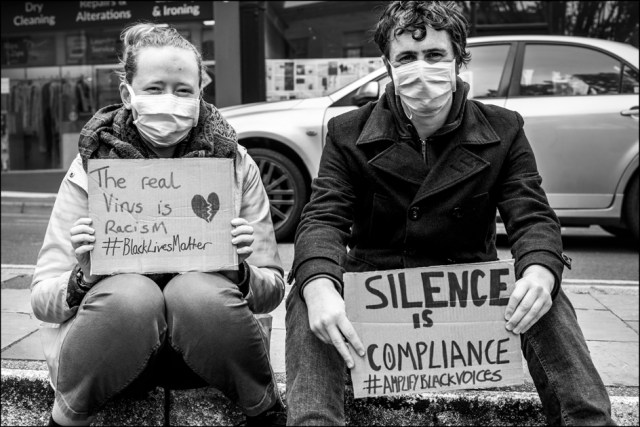
At the end of Week #11, the lockdown measures started to ease off, amid concerns over increase in the ‘R’ number. From 0.7 to 1.1. Some schools are still closed, but some cafes are open for business. The #BlackLivesMatter movement was marked by protests in many towns and cities, including Stroud, Gloucestershire.
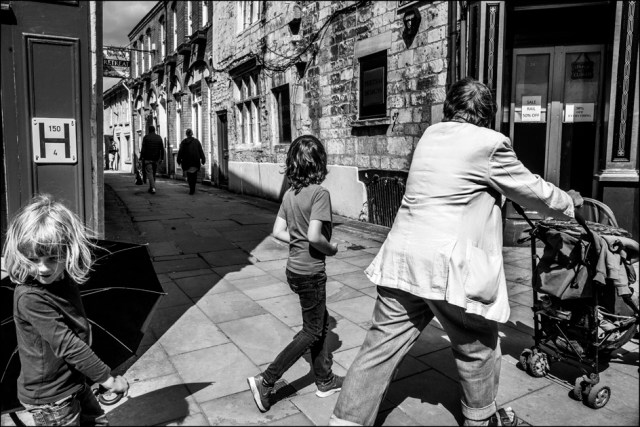
Overall, it rained, it yelled, it poured, it angered, then things carried on as usual.

© Maria Stadnicka, June 2020


Photography © John Stadnicki, June 2020, Midlands, UK

Gallery

Black Talks

© Maria Stadnicka, June 2020


Photography: © John Stadnicki

The Triumph of Pity

Photo: © John Stadnicki, 2020


Equality does not exist. It has never existed. And yet, experiencing or witnessing inequality can bring one a sense of boiling anger. If the feeling gets too unbearable and it keeps me awake at night, I pick up a Christopher Hitchens book. There is vindication when reading Hitchens specially because he is much angrier than me. I suppose one could say that everything could be worse than they are (‘look abroad, look in the Far East, North Pole, Russia’), though in the current socio-political context, they will probably get worse. Until they do, my anger presents itself as a seductive space which I visit as I would visit a freshly dusted home.
I recently came across a paper written by the academic Barry Richards (Bournemouth University) which discusses anger against the ‘establishment’ in the context of the Brexit referendum, giving it a compelling psychosocial dimension*: anger as ‘narcissistic rage against otherness of the authority’ (2019). The social ‘rage’ felt in 2016 materialised in a rejection of the EU’s perceived authority, in an attempt to reclaim promised freedoms which, up to that point, people did not even think they had missed. The populist propaganda played an important role in mobilising that sense of anger, but it must have stemmed from somewhere else, at a far deeper level. Richards talks about a range of socio-economic conditions which nurture the collective anger; among them, the growing economic inequality, the loss of institutional sovereignty, the social tensions fitting into the equation ‘them and us’.

Although often (but not always) anger can be irrational and misunderstood, it can become a projection of one’s sense of humiliation and loss of dignity, a symptomatic difficulty in accepting authority. In social terms, authority can take different forms and shapes and it makes its presence felt in social organisations as well as in leadership structures. Anger projected against institutions and leaders is a weakness in democracy; it makes society receptive to manipulations from charismatic frontrunners (individuals or institutions) who/which place themselves outside the corrupt system that the public is ‘upset about.’

The issue with projected anger in complex democracies needs further attention. With multi-media types of interaction, anger is often, and easily, used as a form of social communication. At the same time, it is an inefficient, if not weak, strategy when it meets well-rehearsed discourses from leadership figures who shout loudly, clearly and repeatedly that they would ‘get things done.’ Going further, the cynical aspect of this theory is that the establishment itself knows this too. The establishment knows that anger:

a). can be projected (therefore it has little impact on the practical aspects of governance) and

b). can be manipulated (therefore people can be given ample new reasons to direct their anger at).

More than that, the establishment understands that if a reasonable proportion of the population has enough material resources to participate in the democratic exercise, the anger simmers for a while without reaching boiling point. And even if it reaches that point, the finger points at the angry, and relatively few, elements within the society, accused of flouting the public duty or the civic responsibility.

In this context, my anger confirms the fact that I am not a good citizen but a narcissistic victim of my own inability to control my feelings. My anger is a symptom of my humiliation and a result of my lack of resources. My anger makes me worthy of pity.


© Maria Stadnicka, May 2020


* Richards, B. (2019) ‘Beyond the angers of populism: a psychosocial inquiry.’ Journal of Psychosocial Studies, 12 (1-2): 171-183.

Urban Afterlife / Week #9 Midlands in Lockdown / United Kingdom


Photography: © John Stadnicki, May 2020

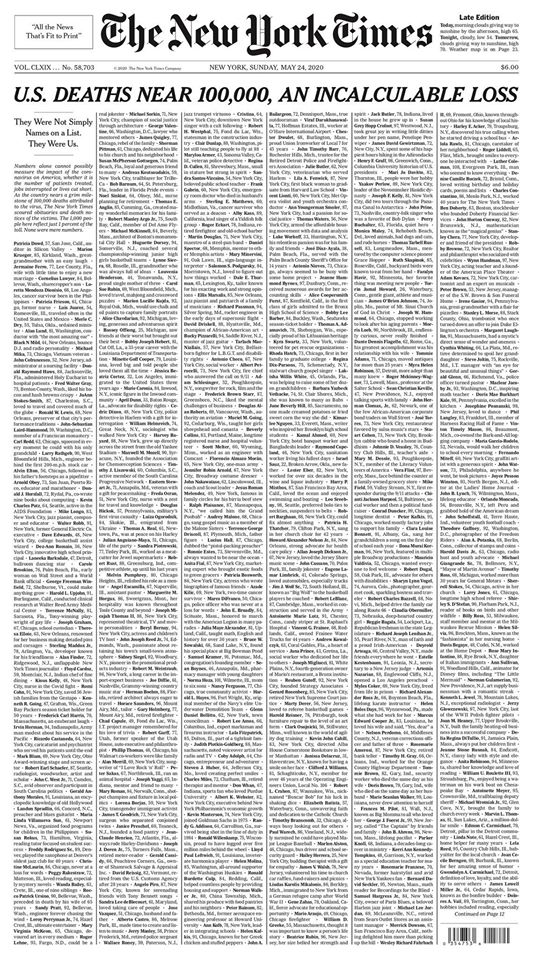
Not Simply Names

© The New York Times. Front page. 24 May 2020.