Stroud Book Festival Poetry Night, 9th November, 7.30pm

The Stroud Book Festival is thrilled to once again be hosting an eclectic line-up of poets and poetry from Gloucestershire and beyond.

The first poet on the bill is multi-award-winning poet and broadcaster, Daljit Nagra, on Thursday 8th November at Wycliffe College, one of the festival’s splendid sponsors. Nagra, who was the first ever poet in residence at BBC Radio 4, will be reading from his latest book, ‘British Museum’, as well as earlier books, including the Forward Prize-winning ‘Yes We Have Coming to Dover!’

“He’s a marvellous reader of his work,” says Adam Horovitz, who will be introducing him on the night, “and his questing, questioning, witty and politically pertinent poems are well worth discovering aloud as well as on the page.”

On Friday 9th November, the Stroud Book festival Poetry Night offers up a wonderfully varied and immersive evening of readings, performance and music by a hand-picked bill of acclaimed poets, in two parts.

The first part brings together three poets with Gloucestershire connections: Kate Carruthers Thomas, Patrick Mackie and Maria Stadnicka. It closes with acclaimed Welsh poet and singer Paul Henry and will be compered by Adam Horovitz.

“On Saturday 10th November we’ll be celebrating the work of Gloucestershire poet and composer Ivor Gurney with a one-woman show starring writer and actor Jan Carey, to mark the 100th anniversary of the end of World War One,” says the festival’s artistic director Caroline Sanderson. “Author, Composer, Soldier-of-a-sort: The Life and Work of Ivor Gurney is fresh from an acclaimed run at the Edinburgh Fringe this summer and we are delighted to bring the show to Stroud.

“We round off our poetry programme on Sunday 11th November with a magical family event inspired by nature,” adds Caroline. “We hope that children of all ages will come and meet Frann Preston Gannon, illustrator of the poetry anthology I-am-the-seed-that-grew-the-tree.

“It’s a glorious new gift anthology of 365 nature poems for children, spanning over 400 years of poetry, and including the work of poets as diverse as William Blake, Roger McGough, Carol Ann Duffy, John Agard, Eleanor Farjeon and William Wordsworth. As well as a chance to enjoy the poetry-telling, Frann will be encouraging children aged 6 and above to create and illustrate their very own nature poem.”

How to book tickets:

In person: at The Subscription Rooms, Stroud

By phone: by calling 01453 760900

Online at https://stroudbookfestival.org.uk
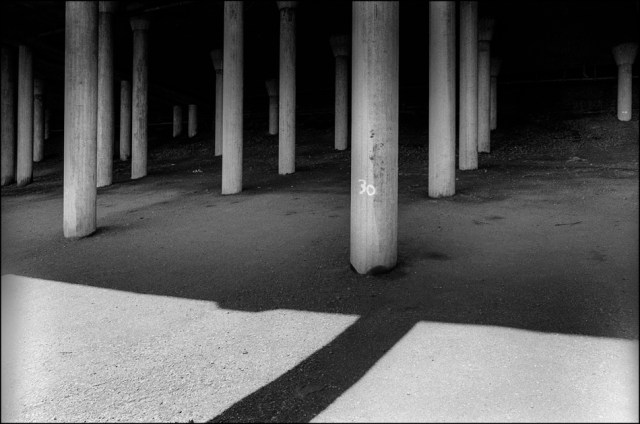
The Politics of Inevitability and the Art Education

Photograph: ©JStadnicki, 2018

There is no way one can observe the social transformations within a community and society without resorting to strong political clues in order to understand the sources of those transformations. And clearly, when things go wrong, we blame the politics, the legislators, the government. But when the political sphere moves away from the reality of the people it represents, the laws and the policies have no real impact on the wide majority. The decision-making groups have little will to support change, and the economic downturn Britain has been experiencing for over a decade seems to move towards a silent collapse. And nobody appears to take responsibility. The blame placed on the government rules like a shadow, hiding underneath the roots of bad financial decisions, personal greed and managerial incompetence.

Let’s consider the situation the art sector is in at the moment.  The issue came into focus with the news of the devastating fire which, this second time, damaged the Glasgow School of Art beyond repair. There you have £35m down the drain, or rather turned to ashes, and everybody is powerlessly looking at the building asking, in disbelief, ‘how could this be possible’. The fate of the Glasgow School of Art seems, for now at least, sealed by confusion and uncertainty. Who is to blame?

Extrapolating the Glasgow tragedy, we are looking for someone or something to blame for the uncertain fate of hundreds of art schools across the country, which slowly, but surely, are decapitated by unachievable targets and percentages. This time, we encounter another type of devastating fire, which is slowly cooking to ashes the art sector, in general, and the art education, in particular: the drive to achieve the funding targets, the attendance and the achievement rates, the literacy and the numeracy benchmarks. What do they all mean? Certainly, they mean nothing to those involved in the art sector (students, artists, writers, musicians, teachers), but mean everything to those in charge to justify the bureaucracy supporting their livelihoods; bureaucracy which satisfies the pleiades of regulators and inspectors. The focus of this type of education is not the youth’s creativity; it is to produce a nation of self-absorbed adults, ready to slot into whatever social square is allocated to them as soon as they join the education system.

And here we face again another type of politics. The ‘politics of inevitability’ as Snyder eloquently describes it, which makes the art education vulnerable and a victim of the constantly expanding globalisation. Since the mid ‘80s, the way we talk about art has fundamentally changed as well as the way the education system works to serve the economy, under the bright colours of neoliberalism.  One would say, what is the problem with that? There is nothing wrong with expecting profitability, and economic success. There is, though, if the principle on which the profit is based, is wrong.

The education and the arts remain essential social institutions  in a healthy society. They create and preserve what we call our ‘decency’. They remain our ‘sane barometer’ if you like, which supports the configuration of our future and the values this future will act upon.

I remember a recent conversation I had with a head of school who recognised that things have taken a turn for the worse, with the Brexit uncertainty looming, but, as he said, ‘what can one do against a whole government, with a mortgage to pay?’

Here we are again, in the blaming game equation. The well-suited head is back in his leather chair, the young artist is back revising for another maths test. New financial cuts are drowning the hope of an economic recovery and the silence of those suffering its effects sounds more and more like a resigned agreement. Not once we feel that the history allows us to see patterns and to understand that action is a possibility.

History permits us, ‘to be responsible; not for everything, but for something’ as the poet Czeslaw Milosz said. This responsibility has always worked against loneliness and indifference.

©Maria Stadnicka, June 2018, Gloucestershire, UK


Gallery

Sketches

Image

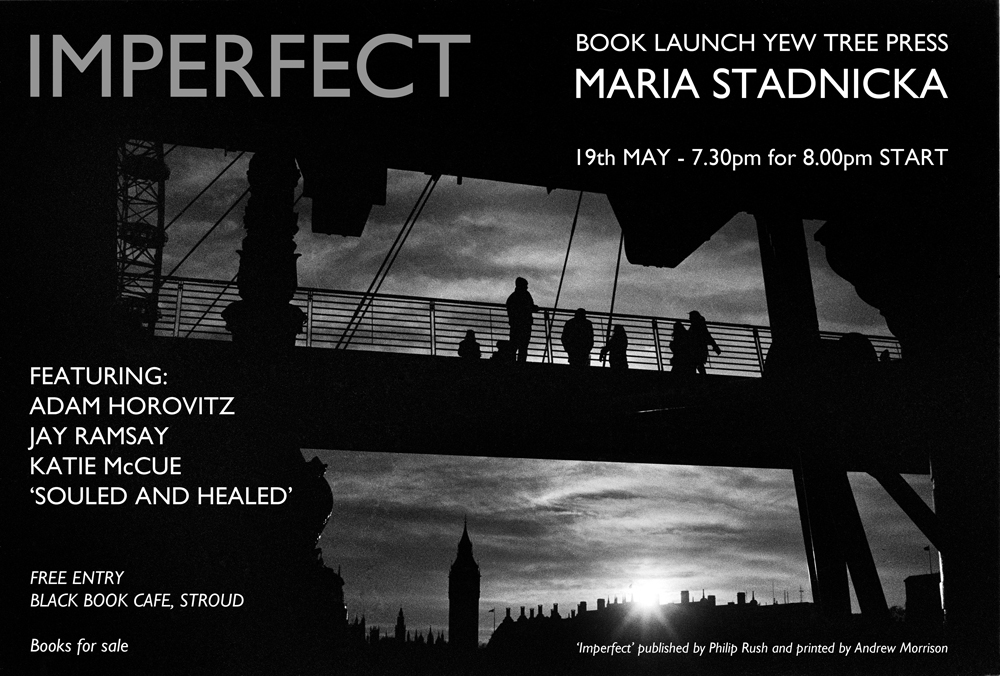
You are cordially invited…19th May, 8pm, ‘Imperfect’ – book launch – published by Yew Tree Press, Stroud, Gloucestershire

New Event – Imperfect Book Launch

Poster design @John Stadnicki

Flash News – ‘Imperfect’ Book Launch – 19th May @Black Books Cafe, Stroud, 7.30pm

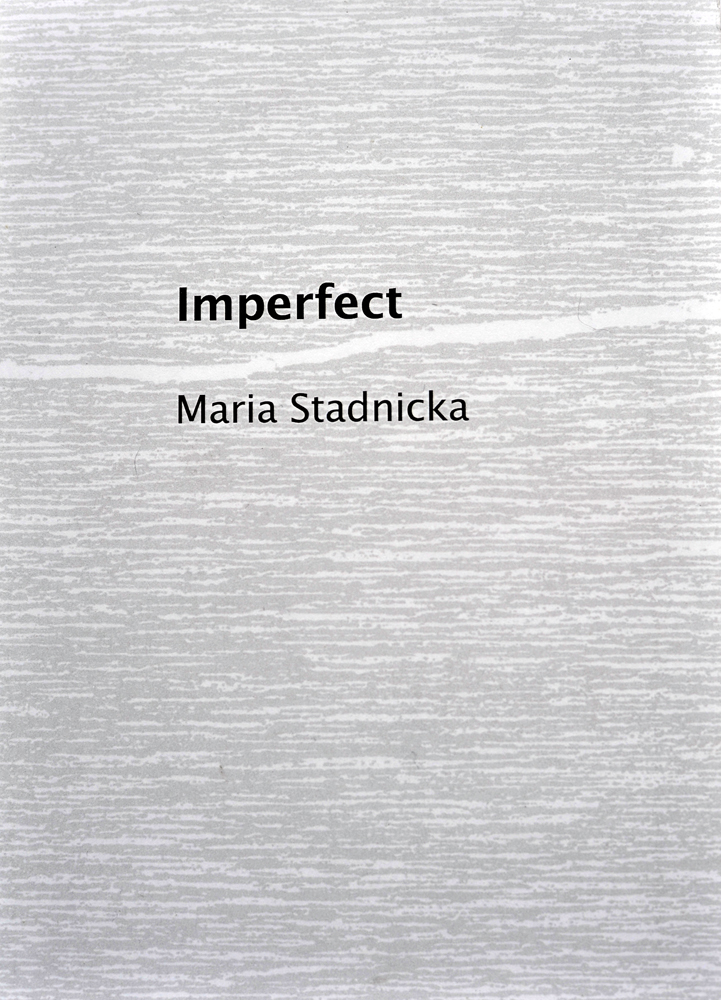
Front cover design: @Andrew Morrison

We had to stop the car several times.

Weeks of anxious waiting finally ended.

A new, small, wrinkled, bloody, placental book

Arrived.

It had a natural birth and I called it ‘Imperfect’.

The book launch will be on Friday 19th May 2017, at Black Books Cafe, Stroud. 7.30pm for 8pm start. Free entry.

The book is available for pre-order at mariastadnicka@yahoo.co.uk.

The evening will be a vibrant performance with poetry and music, featuring Maria Stadnicka, Adam Horovitz, Jay Ramsay, Katie McCue and ‘Souled and Healed’.

Yew Tree Press – Philip Rush

Design and printer – Andrew Morrison

The evening host – Jay Ramsay

Books, drinks, sounds will be available! Come along!

Thought

Tomorrow will come with a sunny spell,

the rain will stop at the border so

we will begin the long-waited rebellion,

as they say,

at the right moment.


To satisfy our need for greatness,

we will politely ask the just questions and

sit on the pew

in return for the hand-written answer.


We will finally go home,

or so we believe,

to master the only remedy left for pain – patience.

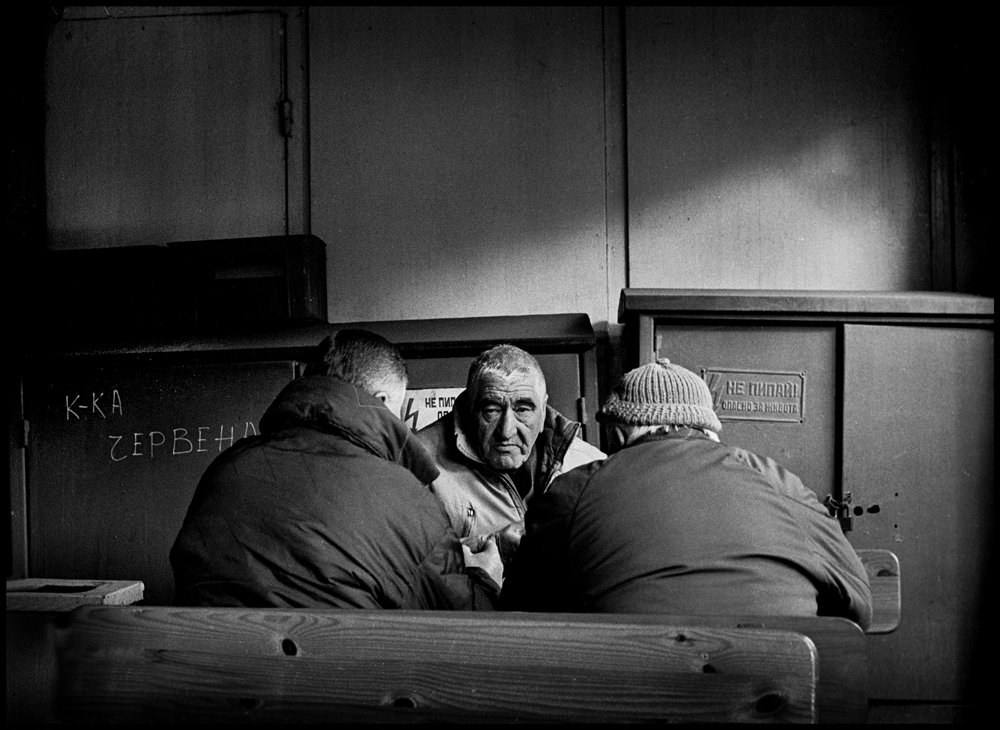
street-cafe-2

Photograph: @John Stadnicki, ‘Street Cafe’

Political Valentine, Music and Poetry

poster

Poster Design: RCM Creative


Stroud’s Politics Kitchen presents a musical experience showcasing a new and exciting political paradigm whose time has come – the Politics of the Heart. This is Politics that recognises that we have more in common than that which divides – a more intelligent, courageous and compassionate politics.

The event, on 11th February 2017 at 19.30 – The Subscription Rooms Stroud, features music from the sensational Bristol-based Spiro who are described as “World Music that speaks directly to the soul” – this is a truly unmissable event.

“This is soulful, passionate music, and I love it”, says Peter Gabriel, speaking of Spiro (see links below). If there were a ‘Stroud Sound’, Spiro would surely be it.

They are supported by Jennifer Maidman Music, stellar singer-songwriter and ex-member of the legendary Penguin Café Orchestra, 1984–2007.
Spiro are also supported by Hattie Briggs another wonderful singer-songwriter, inspired by the likes of Joni Mitchell and James Taylor Hattie recorded her debut album, ‘Red and Gold’ with Peter Waterman (Joss Stone/Uriah Heep/Emma Ballantine), as was her second album, ‘Young Runaway’, in 2016.

The event is supported by and features poetry readings with Gabriel Millar, Maria Stadnicka and JoJo Mehta.

Tickets available at Stroud Subscription Rooms: http://www.subscriptionrooms.org.uk/whats-on/politics-of-the-heart-with-spiro/

http://www.spiromusic.com/

http://jennifermaidman.weebly.com/

http://www.hattiebriggs.co.uk/

https://mariastadnicka.com/

Exile

leave-2


Witness to a repeated history

in exile I learn a new language

facing the border control

at Heathrow Airport I wear my mother’s coat

ready for a winter of politics

when I need to

I keep my mouth shut I change my name

to look just like her

white and uncomfortable

the blinding sun has been washed and

smells of violets

people are happy

in such a beautiful land

nobody minds me

amongst

wrapped-well-packed boxes

brushing the dust off velvet cutlery

the only remains

of life before baptism.

centrale-fs-1


photographs: copyright@John Stadnicki, 2016

No Other Survivors

I sit by the emergency exit

at a neat desk

in the office with

neat plastic flowers.


Freshly baked people buzz

empty in black and white.

A typed frozen password on my screen: bonjours tristesse number eleven.

It keeps snowing in Russian.


A nest arrives.

Hollow roundness.

At my window, a kneeled motionless pigeon

is picking and picking at my praying crumbs.

No other survivors.


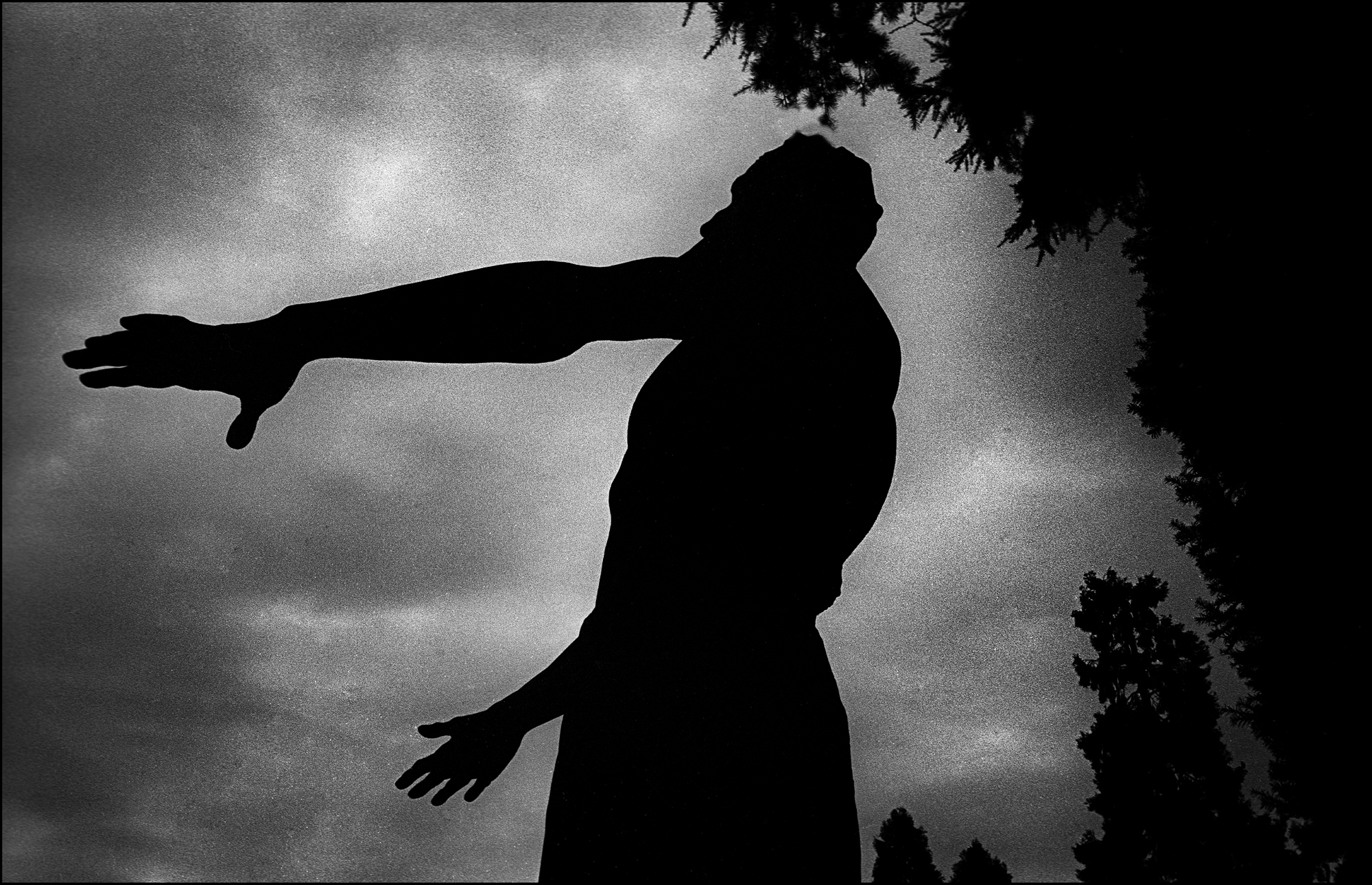
cimitero-monumentale-milano-1


Photography: @John Stadnicki, ‘Cimitero Monumentale’ 2016