The Moth, Issue 38

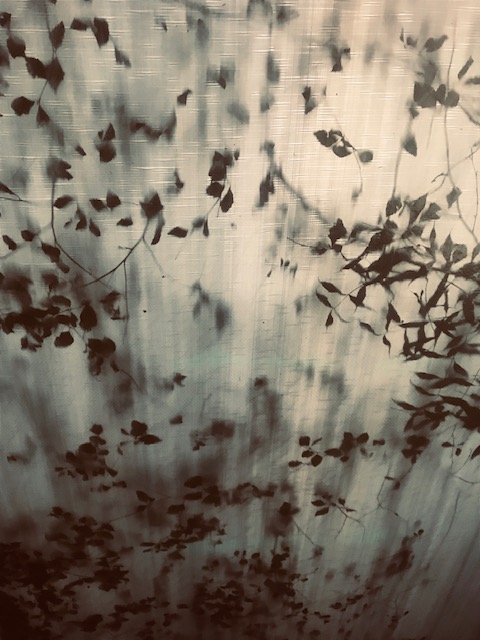
Reading Issue 38/ Autumn 2019 of ‘The Moth’, the beautiful Irish art and literature magazine edited by Rebecca O’Connor.

This issue features a brilliant interview with the American novelist Gary Shteyngart, interview with the Irish poet Stephen Sexton, poetry and prose. Thank you for including my work!

A great way to enjoy the Sunday autumnal light.

You can access the magazine online here: The Moth.

MStadnicka, 2019.

Somnia @Blackpool Illuminations 2019

Poem ‘Composition’ from SOMNIA

Knives, Forks and Spoons Press’s luminous display of ‘Composition’ from new collection SOMNIA at The Blackpool Illuminations Festival 2019.

‘Somnia’ is out now.

If Cain and Abel played the piano, Somnia would have been a piece written for them. Following the four movements of Schubert’s Fantasia in F Minor, Somnia explores the hidden connections between a group of people who witness a crime as they come out of a cinema. Reading their testimony, it becomes increasingly apparent that the murderer is bigger than all of them. Bigger than all of us put together.


Published by Knives, Forks and Spoons Press, Merseyside, UK.

Edited by Alec Newman.

Cover photo, collage created by Mark Mawer.

SOMNIA is available at Knives, Forks and Spoons Press and pre-order at Amazon.

There are so so many people I thank for this. I am grateful for all the support to: Alan Baker, Ionut Boghian, Lesley Burt, Rosie Byrd, David Caddy, Carlie Chabot, Tom Costello, Tom Dwight, Anna Gosson, Beatrice Hitchman, Adam Horovitz, Peter J. King, Jack Little, Morag Kiziewicz, Mark Mawer, Katie McCue, Hugh McMillan, Andrea Morehead, Adelaide Morris, Andrew Morrison, Alec Newman, Stuart Paterson, Hayley Porri, Jay Ramsay, Philip Rush, Hayley Saunders, Aidan Semmens, Steve Spence, John Stadnicki, Natalina Stadnicki, Rick Vick, Samuel de Weer, Jen Whiskerd, Jane Woodend and Neil Young.

Warmest gratitude for the invaluable editorial suggestions and belief in my work to Rupert Loydell, as well as Angela France and Nigel McLoughlin.

Maria Stadnicka, 2019.

Solitary Confinement

© Maria Stadnicka, 2019.

Published in ‘Noon: journal of the short poem’, Tokyo, Issue 15. Available free here.

If You Find My Mother, Buy Her Flowers / Launch: 6th September, Edinburgh.


‘Two unmissable poets – Maria Stadnicka and JoAnne McKay – read from their new book published by The Poets’ Republic Press. This is poetry of superb craft that goes for the jugular in its observation of violence, war, migration and a world that is both familiar and strange.’ (Neil Young, writer and editor)

Friday, September 6th, 7.30pm @ The Waverley, Edinburgh, 3-5 St. Mary’s St., EH1 1TA. 

If You Find My Mother, Buy Her Flowers is written with JoAnne McKay, prefaced and edited by Hugh McMillan, designed by Neil Young, published by The Poets’ Republic Press, Scotland.

Image

Transitions @Tears in the Fence Festival / 20-22 September 2019

Gallery

Lewis & Hole, Stroud, Gloucestershire, 1993

A bit of local history. Lewis & Hole started melting iron in 1946, immediately after the Second World War. Many people from Stroud remember the building, which used to be the centre of Dudbridge area of Stroud.

This is a set of images taken by photographer John Stadnicki in 1993, a few years before the foundry was closed down, following redevelopments in the late 1990s. Although the work conditions were as close to Dante’s Inferno as you can imagine, people were proud of their contribution to the local industry.

Photography: © John Stadnicki, 1993.

This slideshow requires JavaScript.

Kafka

© John Stadnicki, 2019.

The other day, during an afternoon nap,
a tramp came to my door with a letter
for the man in apartment three, ground floor.

The knock made me jump, then I thought
I could give out some change in return,
but the beggar refused; he was holding
a bunch of keys and left saying ‘till tomorrow.’

When I opened the envelope, lying flat
in my bunk, a pair of handcuffs and
steel neck chains dropped on my chest.

© Maria Stadnicka, 2019

Poem published in Osiris, U.S., Vol. 88, July 2019.

Beyond the language of race


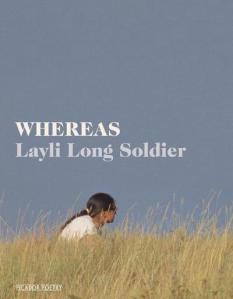
The American poet Layli Long Soldier’s debut collection Whereas was initially published in 2017 by Graywolf Press, Minneapolis. It was awarded the National Book Critics Circle Award, and it was a finalist for the 2017 National Book Award for Poetry. A year later, it received the PEN/Jean Stein Book Award and the 2018 Griffin Poetry Prize.

Published in the UK by Picador, the collection is a response to the Congressional resolution of apology to Native Americans, which President Obama signed in obscurity in 2009. There were no Native Americans present to receive the apology, as most never knew an apology was made. In an introduction to the title poem, Long Soldier admits that the book was written as a ‘response directed to the apology’s delivery, as well as the language, crafting and arrangement of the written document’ (p.57).

Whereas is built on poetics which refuses the boundaries of reading a racial identity. At the same time, it challenges the making of a nation by transforming the page to withstand the tension of an occupied body, country and, more specifically, an occupied language. Indigenous languages are an integral part of the American lexicon though their systematic silencing continues today.

‘Rocking, in this country of so many languages where national surveys assert that Native languages are dying. Child-speakers and elder-teachers dwindle, this is public information. But her father and I don’t teach in statistics, in this dying I mean. Whereas speaking, itself, is defiance.’ [from ‘Whereas Statements’, p.75]

Whereas includes the acknowledgment of writing as a visual act in forms that take on physical boundaries like footnotes, brackets and stitching, disrupted prose blocks. The poems are shaped or fragmented like grass blades or hammer, or boxes.

be

cause

when I

sweat over

diction James

Welch guides me

his angle a marginal

slope corner arrange


ment:

[from ‘Part I. These Being the Concerns’, p.17]

Long Soldier constantly reminds readers of their physical and linguistic bodies, whilst she builds the poems as fields, or people.  This is an unsettling collection which questions English syntax and grammar, disrupting the language at its deepest levels of symbolic representations and meaning. What made me read the book over and over again is the sense of linguistic protest of an artist facing a weaponised American cultural system. As a result, Long Soldier turns the language into a weapon which unearths a deep sense of identity loss, subtly going on under our eyes but unnoticed and unspoken about.

‘WHEREAS I heard a noise I thought was a sneeze. At the breakfast table pushing eggs around my plate I wondered if he liked my cooking, thought about what to talk about. […] There at the breakfast table as an adult I looked up to see he hadn’t sneezed, he was crying. I’d never heard him cry, didn’t recognise the symptoms.’ [from ‘Whereas Statements’, p.65]

Long Soldier is usually referred to first as a Lakota or Oglala Sioux poet, then a concrete or experimental poet. However, her poetry navigates further ahead, excavating, as The New York Times acknowledges in 2017 ‘the language of occupation.’ It also defines a new concept of language created for our own personal narratives. A language which knows no boundaries and restrictions, as our own narratives or pains, know no boundaries and limits. Whereas is an exceptional example of poetry which brings one, face to face, with the possibility of courage in writing. I am now back to reading it. For the fifth time.

©Maria Stadnicka, 2019

Review published in Stride Magazine, 24 June 2019.

Image

Sky