The SHIFT Project / 12th – 16th Oct / St. Laurence Church


This slideshow requires JavaScript.

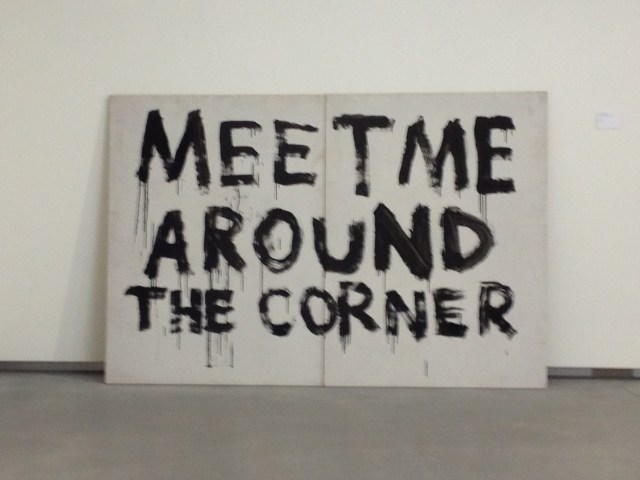
The SHIFT Project started with an art installation created by the young Tasmanian artist Robin Watkins-Davies. It developed in a set of events taking place 12th-16th Oct 2019 at St. Laurence Church, Stroud, which bring together contemporary art, music, dance, exhibitions, workshops, presentations, poetry. It supports young people’s mental health, bringing awareness of the artistic potential of our movement. Further details about SHIFT and the oncoming events here.

Maria Stadnicka, October 2019

Transitia Miserabilia: The Illusion and Delusion of Change

Thirty years ago, the fall of the Berlin Wall signalled the final months of communist regimes in East Europe, leading to a period of transition which culminated with the end of the Cold War.  It marked the transition from realist-socialism to democracy in the Eastern Block states. The change meant new societal structures and political strategies, created in response to the demands of newly formed democratic systems. The transition from mono-party governance to political plurality was difficult and, at times, painful for all newly formed democracies, unaccustomed to rapid market and social changes.

It was as difficult for the Western side of the continent. Left without its common goal which had defined the Cold War, The West began the reconfiguration of own strategies, while maintaining scepticism about the viability of Eastern democracies. However, the European institutions appeared to put aside old ideological conflicts which were replaced with economic alliances. Europe appeared united around a common purpose. The East-West divide went underground, driven by economic competition, by cultural misunderstanding and misinterpretation.

Transition is always marked by change, insecurity, doubt, pain, loss, anxiety and conflict. All transitions have similar attributes. Transition emerges when a revolution ends. Transition brings probing questions about values, beliefs and principles, forcing a society to find new answers. During transition, a society ends up reconfiguring its own institutions and their symbolic power.

Vermeulen (2010) opens another thread of discussion about transition. He proposes ‘metamodernism’ as a concept which defines the current developments in aesthethics, philosophy and arts. These developments are less and less focused on tensions between countries or religions or genders, rich or poor, young or old, black or white.

Vermeulen (2010) identifies that the contemporaneity experiences a more fundamental tension; between past and future. In his vision, our response to this transition it’s about whether ‘we settle for the same divisions, distractions and drama that passes for politics today, or whether we reach for a politics of common sense and innovation, a politics of shared sacrifice and shared prosperity’ (2010).

Transition is defined by fragmentation, a model which dominated the past decade and which has proven detrimental to cultures and societies. In poetry, for instance, the fragmentation created conflict, polarisation and an artistic space unable to cope with / and to respond to, the pace of our time. Whilst poets are caught in the bubble of their own discourse, the artistic focus shifted to expand the engagement with the readership, and to find new audiences.

And one would say, it is all part of this change; nothing wrong with it.

It’s not. But it is!

This type of transition is wrong, when the cultural space shows, as Stevenson (2000) says, that our generation of poets is ‘at the mercy of technology and in thrall to the media.’ It causes the illusion of power and relevance in a culture which has not yet defined what ‘relevance in poetry’ actually is. It is wrong, when the new generation of poets ‘proliferate under pressure to please a specialist clientele’ (Stevenson, 2000). It is wrong, as Susan Sontag remarked in 2002, when contemporary poetry begins to suffer from an ‘uninhibited display of egotism.’ It proliferates a cultural delusion defined by everything goes, everything is important, everything needs to be heard.

In 1934, Russian poet Marina Tsvetaeva published the essay ‘Poets with History and Poets without History’ in which she identifies two opposing categories of poets (and poetry): ‘poets without history’ and ‘poets with history.’

The first category refers to poets preoccupied with self-expression, whilst the second category refers to poets engaged in artistic discovery and literary innovation. Tsvetaeva’s categorization is not without relevance today, more than eighty years later.

The ‘poets without history’ or ‘poets without development’ as she said, include poets consumed by personal expression.

‘Sometimes their knowledge is narrow and they come into world not to learn, but to say. They come into world to make themselves known. […] A poet without history cannot have a striving towards a goal, as his/hers poetry has no project.’

By contrast, in Tsvetaeva’s vision, ‘poets with history’ are:

’like an arrow shot into infinity. They seem to inhabit the creative will, don’t have time to turn around to look at themselves, only pressing forward.’

The process of ‘looking forward’ implies a continuous drive to innovate and explore new artistic territories. And here is our moment of metamodernism, the moment when our transition begins a dialogue between past and future. This is a cultural opportunity which rejects both illusion and delusion, preoccupied with shaping the power of its voice, rather than consumed by its own narrative.

And what kind of poetry can face such a challenge? To quote Seamus Heaney, it is a poetry which doesn’t win ‘competitions in the Irish Times or the New Statesman’ (Heaney, 1974, 2000). It is not a detailed self-interview, but a poetry which questions systems, and it reveals new interpretations of the world. This poetry becomes memorable when the writer assumes the responsibility to challenge complacency, and has the courage to experience the transformative power of change.

© Maria Stadnicka, September 2019 / Published in ‘Stride’ magazine on 15 October 2019.
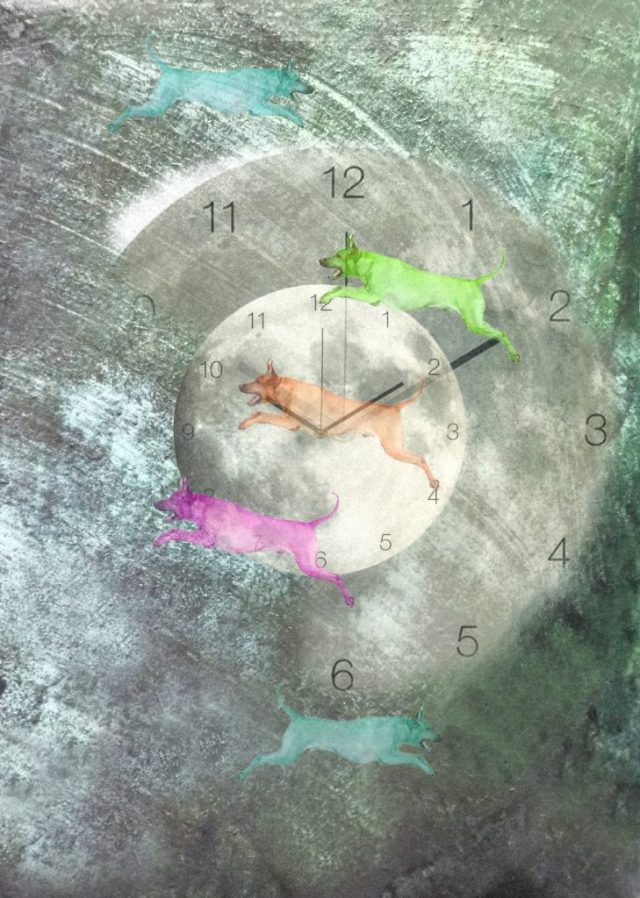
Canine Laws

© Claire Palmer, 2019 ‘International Times’

A dog believes people are dogs as well.
To people, this is of no consequence.  Humans
are immune to associations, particularly to
associations with Evil; specially if the root of
their actions is Evil itself.

If a dog keeps running away from home, let
him free. He needs to find where the noise
comes from.

In canine terms, silence is an instrument for
torturing dogs who are no longer useful to
their masters. If asked, people would deny
knowledge of this.

Despite clocks, dogs measure time in
intervals passed between the end of
punishment and the beginning of wound
healing. Once the skin seals up, people
rewind the clocks.

It takes a lifetime to a dog to become
human, and three weeks to a human to
become beast.

© Maria Stadnicka, 2019. Published in International Times, 14/09/19.


Defending Democracy


Watching the British parliamentary debate last night was a painful experience. The political class has proven to be a group asking and answering its own questions, loyal to its own ideology, pushing the societal divide even further. The televised mockery, wave of insults and well-rehearsed propaganda made parents sent their children to bed early. Many would like to forget what has just happened and, maybe, if possible, to erase the whole chapter from history books. Politicians say ‘they are tired’, referring to the general public watching the live broadcast.

There has been much discussion about the fact that ‘people’ are tired of this Brexit issue, and want it resolved. We are led into believing that we are all tired, and that the public irascibility is caused by the unresolved crisis launched by the Brexit referendum. It is worth remembering that the ‘people’ have not, in fact, created this crisis. In 2016, most people minding their own lives and jobs have been made aware of the referendum by politics. This ‘need’ was man-made, the present democratic crisis was politically manufactured.

For this reason, I am not tired to go back to history books and to dig out examples when freedom of speech and social institutions have been silenced by unelected leaders. Yesterday’s proroguing of Parliament has a great significance, as it creates a historic precedent by limiting the actions of an institution created to question and to challenge governmental decisions. In this context, I wonder who is governing the Government now.

I become increasingly aware that our legacy is defined by the fact that we have taken the democratic values and institutions for granted. Democracy does not defend itself. Democracy can be safeguarded by people keeping a close eye on those governing, and by being involved in decisional processes. Democracy can be defended when people’s values and principles are clear and are functioning. When people are willing to easily give up these values and principles, we face political tragedy.

© Maria Stadnicka, September 2019.

Solitary Confinement

© Maria Stadnicka, 2019.

Published in ‘Noon: journal of the short poem’, Tokyo, Issue 15. Available free here.

If You Find My Mother, Buy Her Flowers / Launch: 6th September, Edinburgh.


‘Two unmissable poets – Maria Stadnicka and JoAnne McKay – read from their new book published by The Poets’ Republic Press. This is poetry of superb craft that goes for the jugular in its observation of violence, war, migration and a world that is both familiar and strange.’ (Neil Young, writer and editor)

Friday, September 6th, 7.30pm @ The Waverley, Edinburgh, 3-5 St. Mary’s St., EH1 1TA. 

If You Find My Mother, Buy Her Flowers is written with JoAnne McKay, prefaced and edited by Hugh McMillan, designed by Neil Young, published by The Poets’ Republic Press, Scotland.

Kafka

© John Stadnicki, 2019.

The other day, during an afternoon nap,
a tramp came to my door with a letter
for the man in apartment three, ground floor.

The knock made me jump, then I thought
I could give out some change in return,
but the beggar refused; he was holding
a bunch of keys and left saying ‘till tomorrow.’

When I opened the envelope, lying flat
in my bunk, a pair of handcuffs and
steel neck chains dropped on my chest.

© Maria Stadnicka, 2019

Poem published in Osiris, U.S., Vol. 88, July 2019.

Beyond the language of race


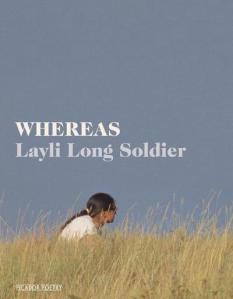
The American poet Layli Long Soldier’s debut collection Whereas was initially published in 2017 by Graywolf Press, Minneapolis. It was awarded the National Book Critics Circle Award, and it was a finalist for the 2017 National Book Award for Poetry. A year later, it received the PEN/Jean Stein Book Award and the 2018 Griffin Poetry Prize.

Published in the UK by Picador, the collection is a response to the Congressional resolution of apology to Native Americans, which President Obama signed in obscurity in 2009. There were no Native Americans present to receive the apology, as most never knew an apology was made. In an introduction to the title poem, Long Soldier admits that the book was written as a ‘response directed to the apology’s delivery, as well as the language, crafting and arrangement of the written document’ (p.57).

Whereas is built on poetics which refuses the boundaries of reading a racial identity. At the same time, it challenges the making of a nation by transforming the page to withstand the tension of an occupied body, country and, more specifically, an occupied language. Indigenous languages are an integral part of the American lexicon though their systematic silencing continues today.

‘Rocking, in this country of so many languages where national surveys assert that Native languages are dying. Child-speakers and elder-teachers dwindle, this is public information. But her father and I don’t teach in statistics, in this dying I mean. Whereas speaking, itself, is defiance.’ [from ‘Whereas Statements’, p.75]

Whereas includes the acknowledgment of writing as a visual act in forms that take on physical boundaries like footnotes, brackets and stitching, disrupted prose blocks. The poems are shaped or fragmented like grass blades or hammer, or boxes.

be

cause

when I

sweat over

diction James

Welch guides me

his angle a marginal

slope corner arrange


ment:

[from ‘Part I. These Being the Concerns’, p.17]

Long Soldier constantly reminds readers of their physical and linguistic bodies, whilst she builds the poems as fields, or people.  This is an unsettling collection which questions English syntax and grammar, disrupting the language at its deepest levels of symbolic representations and meaning. What made me read the book over and over again is the sense of linguistic protest of an artist facing a weaponised American cultural system. As a result, Long Soldier turns the language into a weapon which unearths a deep sense of identity loss, subtly going on under our eyes but unnoticed and unspoken about.

‘WHEREAS I heard a noise I thought was a sneeze. At the breakfast table pushing eggs around my plate I wondered if he liked my cooking, thought about what to talk about. […] There at the breakfast table as an adult I looked up to see he hadn’t sneezed, he was crying. I’d never heard him cry, didn’t recognise the symptoms.’ [from ‘Whereas Statements’, p.65]

Long Soldier is usually referred to first as a Lakota or Oglala Sioux poet, then a concrete or experimental poet. However, her poetry navigates further ahead, excavating, as The New York Times acknowledges in 2017 ‘the language of occupation.’ It also defines a new concept of language created for our own personal narratives. A language which knows no boundaries and restrictions, as our own narratives or pains, know no boundaries and limits. Whereas is an exceptional example of poetry which brings one, face to face, with the possibility of courage in writing. I am now back to reading it. For the fifth time.

©Maria Stadnicka, 2019

Review published in Stride Magazine, 24 June 2019.

Exit and Antiexit


The History’s Dog

‘Man bites dog’ is the first principle learnt at uni. Thought I could never fully picture the concept, I always imagined the breed of dog which would make man resort to such extreme behaviour. Despite its metaphoric connotation, ‘man vs dog’ has proven to be a successful broadcasting formula for decades. With time, the ‘dog’ matters less and other realities take its place.

News moves with fluidity on the axis entertainment – truth value. It becomes irrelevant that the closer to entertainment, the further we slide away from reality. Whilst audiences are locked in a labyrinth of breaking news and data, most people have little time to investigate what goes on in the real world. It is not surprising that among the most googled questions one finds what time is it?, is it going to rain today?, how can I make money? or what is my name?. Who has the luxury to look beyond? We trust that journalists have it, and they should take the responsibility upon themselves to bring forward the missing parts of our world. And they do.

© Committee to Protect Journalists, 2019.

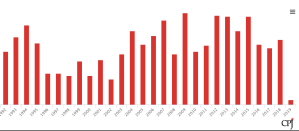
Without their work, I wouldn’t have known that, between 1997-2006, 378 journalists were killed doing their job. I wouldn’t have known that Wikileaks was already one year old in 2007, three months had passed since Anna Politovskaya’s murder, a new diplomatic row started between London and Moscow (over Britain’s bid for extradition of Andrei Lugovoi, an ex-KGB agent accused of Litvinenko’s murder), that Russia suspended participation in the 1990 Conventional Armed Forces Treaty in Europe (a treaty that limits the deployment of heavy military equipment across Europe.)

I wouldn’t have remembered that the EU expanded with two more states, Romania and Bulgaria, Barack Obama was in full presidential campaign and Gordon Brown moved from 11 to 10 Downing Street. 2007, a few months till the Lehman Brothers Bankruptcy, which triggered global recession. The Doomsday Clock was moved to five minutes to midnight in response to North Korean renewed nuclear ambitions and tests. The War in Afghanistan and the Iraq War, in full swing.

These are facts from a distant past now. History. It is already history that 612 journalists were killed doing their job, between 2007-2016. Almost double than the previous decade. History too, last week’s sigh of relief watching Notre-Dame being saved by a near-miracle. In the meantime, history added a new name to statistics: Lyra McKee.

©Maria Stadnicka, 2019

Published in International Times on 27/04/2019.