
© JStadnicki 2020

© JStadnicki 2020

© JStadnicki 2020

© JStadnicki 2020

© JStadnicki 2020

© JStadnicki 2020


At some point in 2017, travelling from Germany to the UK, via France, I made an overnight stop in Calais. This is my diary note, dated 24th August:
‘Two years since I last visited the ‘jungle’ camp. I don’t see migrants around the French Docks anymore, as the temporary camp was demolished. Bulldozers flattened down tents donated by NGOs, improvised kitchens, food distribution points, and the school built out of cardboard and polystyrene. Silence surrounds the old site. A silence I encounter in Calais, at the border check points, in the media. It measures our collective dissociation from tragedy, the anonymity of Syrian refugees’ stories, the anonymity of their predicament. Where have the Syrian people manage to settle? Far North, further South?’
The refugees came and went. In and out of history, their tragedy captured the West’s attention for as long as their presence disturbed the flux of goods and tourists at the French border.
But history is unforgiving and it does not forget. Diplomats, academics, politicians, strategists are currently gathered at the Munich Security Conference, taking place in Germany 14th-16th February. The conference’s agenda covers talks and debates around energy, food, climate and internet security, as well as travel, investments and foreign policies. It is an attempt to re-think the European priorities, at times marked by insecurities brought on by the Covit-19 outbreak and the economic trade volatility. I would have thought this is an important enough event to require British diplomatic presence, but unfortunately, the UK is missing the event altogether.
This morning, in an interview for BBC Radio 4, David Miliband, former British Foreign Secretary, currently CEO at International Rescue Committee, expressed his disappointment at the lack of vision in British politics and the inability to work towards a wider European / global scope rather than obsess over its own short-term goals. I can probably understand Miliband’s bitterness though Milliband is there to represent the interests of his own NGO, while I’m drawn to a debate item placed on the first day’s agenda: Human Security and Westlessness.
There is a strong sense that Western democracies are beginning to see their power and influence fading, overwhelmed by complex global issues which require solutions based on vision and multi-national collaboration. To put it plainly, the West has started to understand that ‘the cold reality is not that autocracy will triumph and democracy will fail, but rather that the 500-year-long era of Western global supremacy is coming to an end’ (Barber, 2019). One could go even further and say that the West has lost it’s power with the rise of populist nationalist ideas, based on hostility to immigrants and protectionist economic interests. Francis Fukuyama (2019) sees the current climate as a ‘fundamental mistake’ that facilitates abusive use of power and threatens the liberal order.
Populist nationalist ideology brushed under the carpet the tragedy of thousands (if not millions) of Syrians who find themselves displaced all over Europe by war, destruction and famine. Displayed and begging.
In Britain, for instance, 45,255 Syrian refugees are waiting for an initial decision on their asylum applications, and more than half have waited for longer than six months already (Refugee Action, 2019). This is a symptom of a diseased bureaucratic system which serves its purpose well: to keep powerful institutions away from the citizens that they are supposed to protect and serve.
Nonetheless, real power is not in institutions but in the people that support institutions. Real power is in the small action which makes a big difference. Real power is about remembering, not forgetting, tragedy; it is about engaging resources to support lives and communities, not bureaucratic interests. As the silence coming from top level politics reaches epidemic proportions, I begin to understand that forthcoming governmental priorities will ignore issues concerning people, and will concentrate on managing databases. And if nobody keeps on talking about it, if nobody keeps the pressure on the decisional factors, the Government’s job will soon be nothing but a walk in the park which serves its own interests. Silence empowers bureaucracy and kills people.
© Maria Stadnicka, 15 February 2020.
Published in International Times on 22 February 2020.
References:
Barber, T. (2019) Rise of autocracies spells end to the West’s global supremacy. In: Financial Times, 6 November 2019. Available from: link.
Fukuyama, F. (2019) in: Spear’s, Arun Kakar: Francis Fukuyama on Trump, and why Brexit could be the end of Britain, 25th September 2019. Available from: link.
Munich Security Conference 2020 agenda available from here. The conference is live-streamed here.
Munich Security Report 2020 is available as pdf. doc here.
Refugee Action UK (2019) Press Release. Available from link..

Illustration © Claire Palmer 2020
after Kasparov vs Karpov, 1986
The playground is open, with white to move.
D4 F6. A few pawn boys make a safety zone
out by the swings, waiting for Father to fall for the ruse.
C4 G6. Everyone calls the queen Sis’ Loretta
when she jumps over the Treatment Room’s steps
to the battlefield. The fifth move: Q to B3.
By the eleventh round, the game enters
a phase of hand-to-hand combat. Father attacks,
we defend on each side. Sister gets hurt,
two pawn boys, sacrificed, but nobody castles.
Our fight, bishop to rook. Checked on the playground
as the last knight falls at the match point.
Most pieces are gone on both front lines. Thirty-one
moves. Checkmate. From the opposing team,
Father says we are playing a game bigger than us.
© Maria Stadnicka 2020
Published in ‘International Times’ on 8th February 2020.

We queue at the airport,
pretending to watch
a lunar eclipse.
We fear sharp objects.
Passengers hold boarding passes up,
flags in a moving crusade.
All windows are half-open,
but nobody looks out.
Heat seals glossy layers
of mist over my homeland.
We have outgrown the raincoat
tripping over someone’s thoughts
in the two-minute stop between stations.
At odd times, the planes take off.
Letters drop from above
on neighbouring gardens,
seeds growing tall in silent parks.
We remove luggage tags, barely notice
the music of a mid-air explosion.
Blades of grass stand ready to shoot.
© Maria Stadnicka 2020
‘Shooting Position’ is published in Somnia, out now at Knives, Forks and Spoons Press, UK.
‘Shooting Position’ was initially published in Meniscus, The Journal of Australasian Association of Writing Programmes, Canberra, Australia.

© JStadnicki 1995
During the 80s, grandfather had the habit of listening to Radio Free Europe on a crackling wireless which worked only if bashed about a few times. I understood very little of what was said in news bulletins and documentaries, but some words kept coming up in conversations he’d have with friends at the village pub. Over a couple of beers, it felt as if their banter about freedom, dictatorship, justice was a disguised form of perversity which made no sense to me at that time.
Even now, recollecting those Friday catch-ups, their invectives sound pointless, though I’ve tried numerous times to find out what they were actually upset about. It must have been in the mid 90s, after grandfather died, when searching through a pile of his old stuff I found this:
Modern dictatorships come about gradually through policies which limit the access to information, books, art, and support an education system reliant on overheads, statistical outcomes and hierarchical leagues. They emerge in communities that support equality and diversity while slowly reducing the means which offer disadvantaged people and their families the benefit of services with real impact to their lives.
Modern dictatorships embed themselves in services which monitor and limit freedom of speech, and flag out people who disagree (or have the potential to disagree) with official discourses; they also produce political directives to serve partisan interests, while dominating the public discourse with narratives designed to create fear and panic.
Modern dictatorships ask citizens to report friends, colleagues, neighbours, and scrutinise differences between people instead of promoting inclusion and common purpose; they also make people obsess over how bad things can be, when they should stimulate creativity and learning. If people are born equal, they should develop equally. This cannot happen when they are scared. There is no progress after punishment, just pain and bitterness.
© Maria Stadnicka 2020
Published in International Times on 1st February 2020.
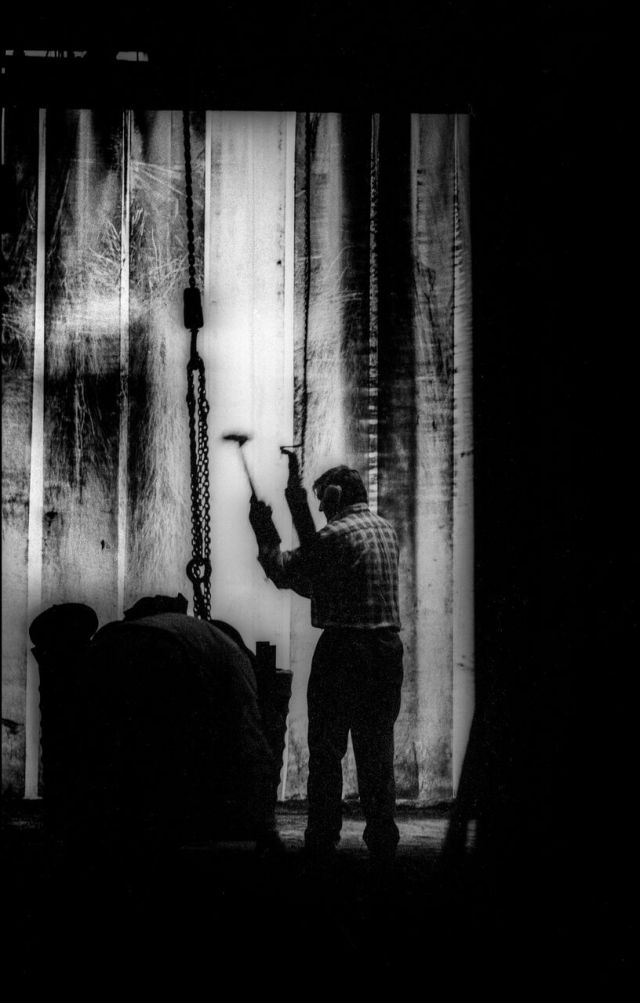
When I feel lonely, I visit my local tip. Apart from Wednesdays, I’m guaranteed to find someone about, willing to help me get rid of a load of stuff which, up to that point, had prevented me from moving on in life. One time I discarded so much of my old junk that back home I noticed the front door sign was gone, and the post box which had my name on it. I got in, and a woman I’d never met before was moving about hoovering. She was wearing my shoes.
© Maria Stadnicka 2020
[From ‘Hermit Age’ sequence published in International Times on 25/01/2020.]
© JStadnicki 2014
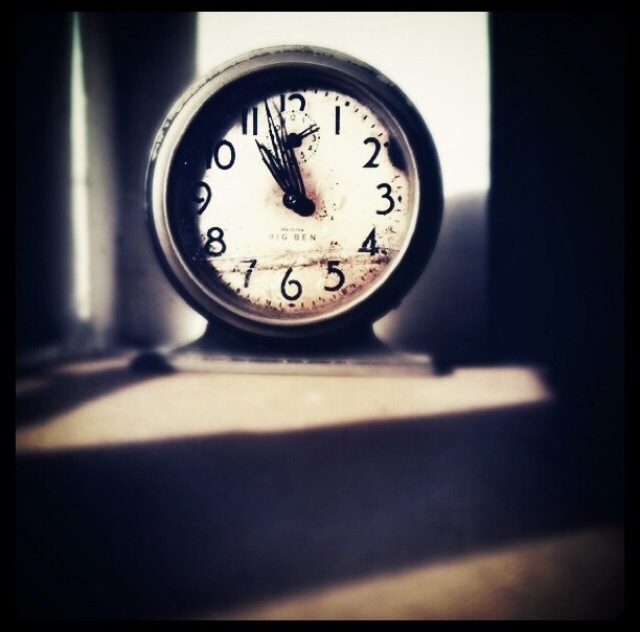
With the Doomsday Clock adjusted to one hundred seconds to midnight, it seems that the scientific community points a finger to the inevitable end which could engulf the world any day now. It is a narrative we are used to from history manuals and our recent past. Textbooks are full of numbers and data.
Unifications and destructions, wars and peace treaties, revolutions and resolutions. The collective conscious, mapped by dichotomies, makes better sense of realities when they are placed in opposition. It is a cultural binary thinking, focused on good-better-best and bad-worse-worst. It is easier to make meaning of things in conflict, as it is easier to understand war better than peace.
History always takes a closer look at how cultures come into being and how they are destroyed, and takes less time to look at what happened in between. The complexities of development entail, besides time, a higher level of engagement and perception. The consistent preoccupation with the specifics of our apocalypse is not just the measure of our own selfishness, but a fundamental thinking flaw, characterised by fear and apathy.
Looking at how communities got to meet their ends, without taking time to reflect on solutions, is bound to bring the finale even closer. Fear and adrenaline rush end up in apathy. They have done so for thousands of years, and brought us where we are today.
© Maria Stadnicka 2020

Last time my brother and I talked poetry, we ended up
arguing. His five-year old daughter found my book easy
to read, though it had a major flaw. No pictures. It made
everyone rather uncomfortable. Having to explain words
like ‘deluge’, ‘carnal’, ‘empiric’ without visual clues, it is
beyond my fatherly competency, he said. I often thought
that …Plus, he added, each time you write about me, things
get so twisted I’m not sure whether it’s me you refer to or…
I often think it’s the idea of him, or a bucket of old stuff
we picked up together moving about in the world. They are
mostly words he now repeats facing a neurologist, hoping
to pass a memory test. It’s me… the… fourth… of…Tuesday…
The last time him.
© Maria Stadnicka 2020


© Maria Stadnicka 2020

© JStadnicki, Paris 2019
Technology and I are not on good terms as of late. Due to limited memory space, mobile apps keep freezing. Vodanex contacted me a few times already with updated offers then with sound advice which I politely requested to have mailed over. The experts suggest that my memory clutter is most probably coming from the BooksApp; too many pages left open in standby. The longest kept on the waiting list has been Is God Happy?* I flick through an essay on socialism which Leszek Kolakowski started at page fifty-eight and finished at sixty-four. My phone pings: Congratulations! Time for a break! You now reached your daily reading goal!
© Maria Stadnicka 2020
[From ‘Hermit Age’ sequence published in International Times on 25/01/2020.]
* Kolakowski, L. (2012) Is God Happy? Selected Essays, London: Penguin Modern Classics.

