16 June, 7.30pm (UK time). Free event online!


An opportunity to hear new work as well as fragments from Somnia.

Event organised by Gloucester Poetry Festival!

Registration and further information: here.

Thank you!

Note:
Latest book Somnia published this year by the Knives, Forks and Spoons Press was released on 6th April and can be ordered from the following independent bookshops:

Banner Books (Ennistymon)
http://bannerbooks.ie

Book Corner (Saltburn-by-the-Sea)
bookcornershop.co.uk

The Bookshop (East Grinstead)
eastgrinsteadbookshop.co.uk

Brendon Books (Taunton)
brendonbooks.co.uk

Bridge Bookshop (Isle of Man)
bridge-bookshop.com

Browsers Bookshop (Porthmadog)
browsersbookshop.com

Gullivers Bookshop (Wimborne)
booksandvinyl.co.uk/gullivers

Gnash Comics
gnashcomics.co.uk

Gwisgo Bookworm (Aberearon)
gwisgobookworm.co.uk

Haslemere Bookshop (Haslemere)
haslemerebookshop.co.uk

Hungerford Bookshop (West Berkshire)
hungerfordbookshop.co.uk

Lindum Books (Lincoln)
facebook.com/lindumbooks

Mostly Books (Abingdon)
mostly-books.co.uk

Niche Comics and Bookshop (Cambridgeshire)
nichecomics.co.uk

Red Lion Books (Colchester)
redlionbooks.co.uk

Sam Read Bookseller (Grasmere)
samreadbooks.co.uk

Wivenhoe Bookshop (Essex)
wivenhoebooks.com

The Woodstock Bookshop
woodstockbookshop.co.uk

Further information about her work, collaborations and reviews at http://www.mariastadnicka.com.

Join us on Zoom (you will need to register for a ticket in order to receive the pass-code):-

https://zoom.us/j/93290445542

Dial in to join by phone if you wish:-

+44 330 088 5830
+44 131 460 1196
+44 203 481 5237
+44 203 481 5240
+44 208 080 6591
+44 208 080 6592

Find your local number: https://zoom.us/u/aeg9xXpiad


June 2020

Colston versus Lenin – Using the Right Channels

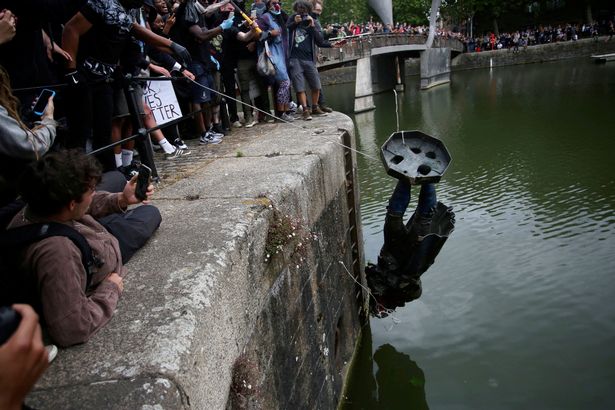
Protesters taking down Colston statue. Bristol, UK / 7 Jun 2020

A statue of slave trader Edward Colston was torn down during an anti-racism protest in Bristol. The incident opened an ideological war in my household. We go over the pros and the cons of public disorder acts, we discuss the moral arguments which might justify or condemn these acts, while the Home Secretary, Priti Patel stands in Parliament reproving the thuggery committed by the Bristolian mob. Mayor Marvin Rees takes to national media to disapprove the protesters’ acts of violence during the past weekend. Social media is blasting. Opinion is split. Some ask for prosecution of violent mobsters, others express a sense of connection with the symbolic point made by protesters.

In Bristol, Colston’s statue went down in a matter of minutes, with the authorities’ disapproval. I remember that it took Ukraine 27 years to decide the removal of the infamous statues of Lenin from all its towns and villages. In 2017, all 1,307 statues went down, quietly and slowly, as a sign that Ukraine was finally ready to condemn its pro-soviet past, and to move on. The Ukrainian government went further and renamed streets, urban areas, parks, schools, in a national attempt to heal past injustice and loss of lives during the Soviet Era.

Ukrainians witnessing Lenin’s statue being taken down by local authorities. Aug. 2017

At my dinner table, the conversation is about the role of a peaceful protest in well-established democracies, as the Home Secretary carries on with her speech about the peaceful dialogue which needs to happen in our society. I’m reminded that we have structures in place to make peaceful changes under the common law, and following policies and procedures that safeguard equality in this country. There is a well-known corporate jargon about ‘using the right channels’ which is invoked on occasions when discrimination and inequality are at the centre of disputes between people, groups, societies, organisations.

Each private, public, voluntary, religious organisation, each workplace, each adult, teenager and child knows at least one principle of equality.  And yet, the more we know, the wider the social divide feels to those who have been, at least once, at the receiving end of inequality, of discrimination or injustice.

If we were equal, we should not need to be taught equality by the Home Secretary, as it would be an inherent quality of our social actions. Yet, Power teaches equality lessons using the boot of law against ‘thugs’, ‘criminals’, ‘mobsters’. A sign that we are not ready to recognise the injustice and its roots, nor to break free from past mistakes.

© Maria Stadnicka, June 2020

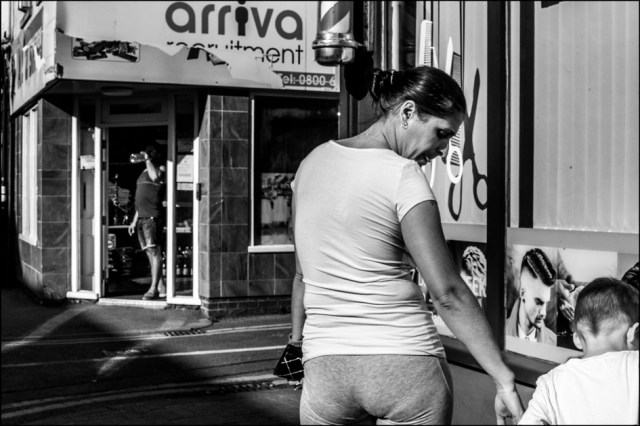
Week #11 Pandemia / Midlands, United Kingdom

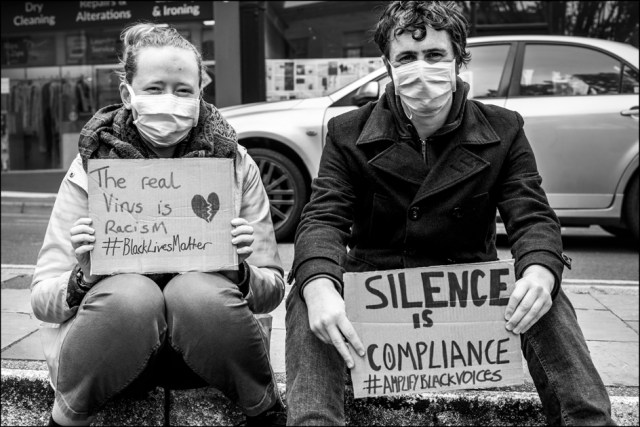
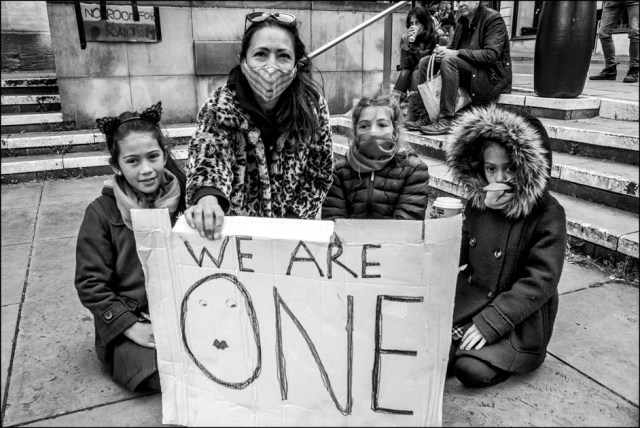
At the end of Week #11, the lockdown measures started to ease off, amid concerns over increase in the ‘R’ number. From 0.7 to 1.1. Some schools are still closed, but some cafes are open for business. The #BlackLivesMatter movement was marked by protests in many towns and cities, including Stroud, Gloucestershire.

Overall, it rained, it yelled, it poured, it angered, then things carried on as usual.

© Maria Stadnicka, June 2020


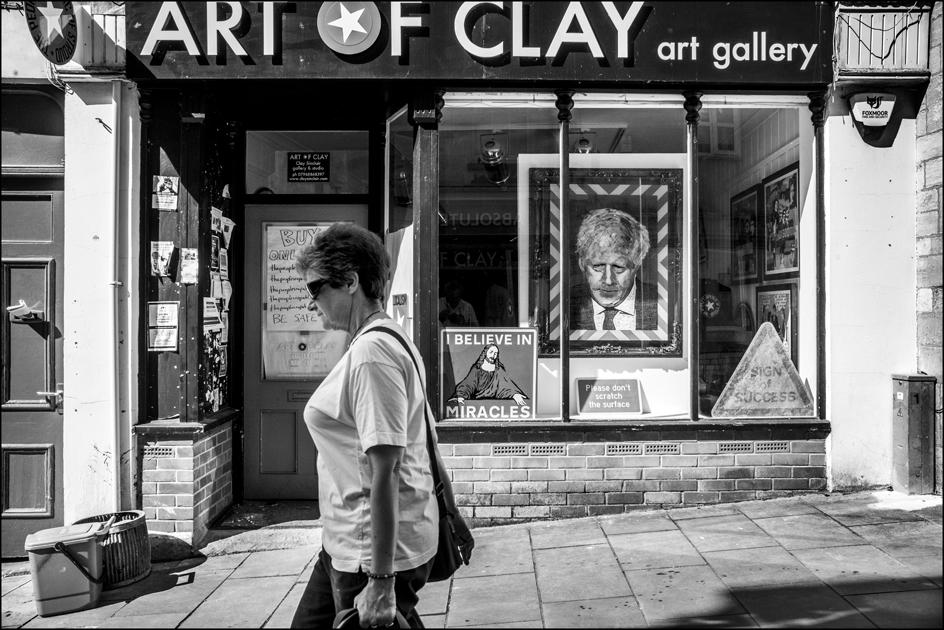
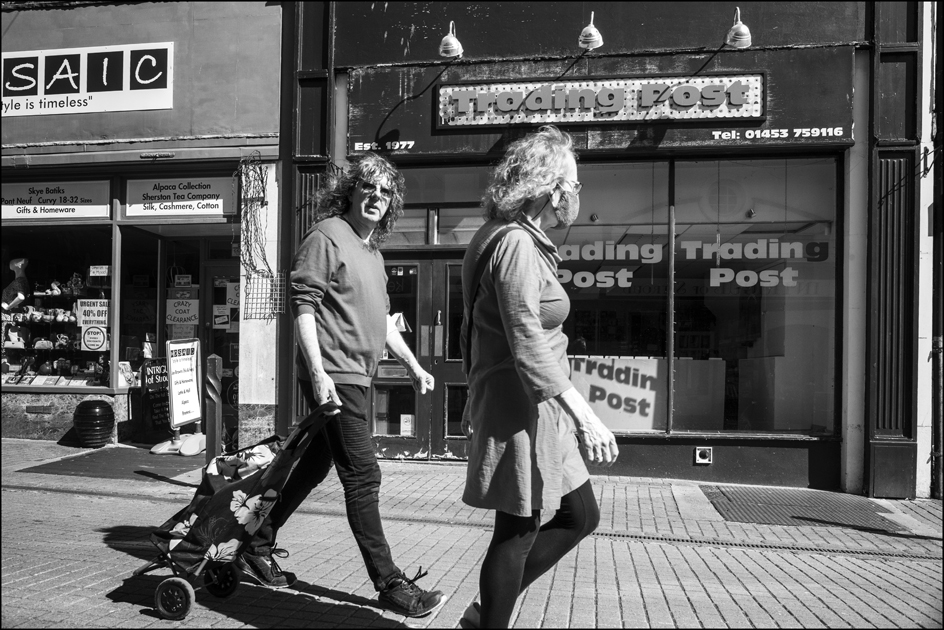
Photography © John Stadnicki, June 2020, Midlands, UK

Gallery

Black Talks

© Maria Stadnicka, June 2020


Photography: © John Stadnicki

The Triumph of Pity

Photo: © John Stadnicki, 2020


Equality does not exist. It has never existed. And yet, experiencing or witnessing inequality can bring one a sense of boiling anger. If the feeling gets too unbearable and it keeps me awake at night, I pick up a Christopher Hitchens book. There is vindication when reading Hitchens specially because he is much angrier than me. I suppose one could say that everything could be worse than they are (‘look abroad, look in the Far East, North Pole, Russia’), though in the current socio-political context, they will probably get worse. Until they do, my anger presents itself as a seductive space which I visit as I would visit a freshly dusted home.

I recently came across a paper written by the academic Barry Richards (Bournemouth University) which discusses anger against the ‘establishment’ in the context of the Brexit referendum, giving it a compelling psychosocial dimension*: anger as ‘narcissistic rage against otherness of the authority’ (2019). The social ‘rage’ felt in 2016 materialised in a rejection of the EU’s perceived authority, in an attempt to reclaim promised freedoms which, up to that point, people did not even think they had missed. The populist propaganda played an important role in mobilising that sense of anger, but it must have stemmed from somewhere else, at a far deeper level. Richards talks about a range of socio-economic conditions which nurture the collective anger; among them, the growing economic inequality, the loss of institutional sovereignty, the social tensions fitting into the equation ‘them and us’.

Although often (but not always) anger can be irrational and misunderstood, it can become a projection of one’s sense of humiliation and loss of dignity, a symptomatic difficulty in accepting authority. In social terms, authority can take different forms and shapes and it makes its presence felt in social organisations as well as in leadership structures. Anger projected against institutions and leaders is a weakness in democracy; it makes society receptive to manipulations from charismatic frontrunners (individuals or institutions) who/which place themselves outside the corrupt system that the public is ‘upset about.’

The issue with projected anger in complex democracies needs further attention. With multi-media types of interaction, anger is often, and easily, used as a form of social communication. At the same time, it is an inefficient, if not weak, strategy when it meets well-rehearsed discourses from leadership figures who shout loudly, clearly and repeatedly that they would ‘get things done.’ Going further, the cynical aspect of this theory is that the establishment itself knows this too. The establishment knows that anger:

a). can be projected (therefore it has little impact on the practical aspects of governance) and

b). can be manipulated (therefore people can be given ample new reasons to direct their anger at).

More than that, the establishment understands that if a reasonable proportion of the population has enough material resources to participate in the democratic exercise, the anger simmers for a while without reaching boiling point. And even if it reaches that point, the finger points at the angry, and relatively few, elements within the society, accused of flouting the public duty or the civic responsibility.

In this context, my anger confirms the fact that I am not a good citizen but a narcissistic victim of my own inability to control my feelings. My anger is a symptom of my humiliation and a result of my lack of resources. My anger makes me worthy of pity.


© Maria Stadnicka, May 2020


* Richards, B. (2019) ‘Beyond the angers of populism: a psychosocial inquiry.’ Journal of Psychosocial Studies, 12 (1-2): 171-183.

Midlands in Lockdown / Week #10 / At Eye Level

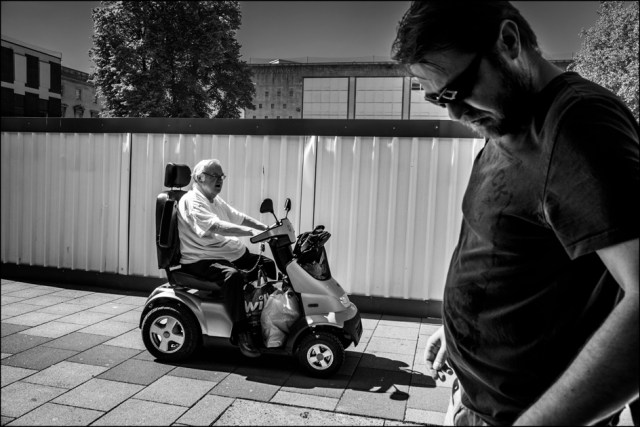
Photography © John Stadnicki, May 2020

Urban Afterlife / Week #9 Midlands in Lockdown / United Kingdom


Photography: © John Stadnicki, May 2020

Not Simply Names

© The New York Times. Front page. 24 May 2020.

The Earth Inside / Week #8 in Lockdown / Midlands, United Kingdom

You wander countless streets

pass a pandemic that seems

to go on forever.

But nothing is eternal.

Photography © John Stadnicki, 2020

Rite of Lockdown / Week #7 / Midlands / United Kingdom


Rite


Sunday lingers on scent of paint,

tobacco and spring. Our kitchen-war

sprouts from a conversation on books

about people we both know. I say


I’d met doctor Zhivago queuing

at Nero’s, heard him asking a barista

about the fate of taiga-trees

at the height of a mining season.


You think they are cut short then stop

growing. I lock my paperbacks

in a cupboard; they remind us

of all the ink twisted in verse, seeded


in layers of gravel. Our verbs reach

the pit of a quarry, and seal over.

Snow forests shoot up in tears,

we trip over extension cables in our flat.


© Maria Stadnicka, May 2020


Photography: © John Stadnicki 2020