Water Sequence

‘Water Sequence’ poem © Maria Stadnicka, 2020

The poem ‘Water Sequence’ features in the latest collection ‘Somnia’ published by the Knives, Forks and Spoons Press, United Kingdom and it is officially released today.

‘Somnia’ is now available here and here.

Cover art work © Mark Mawer, 2019

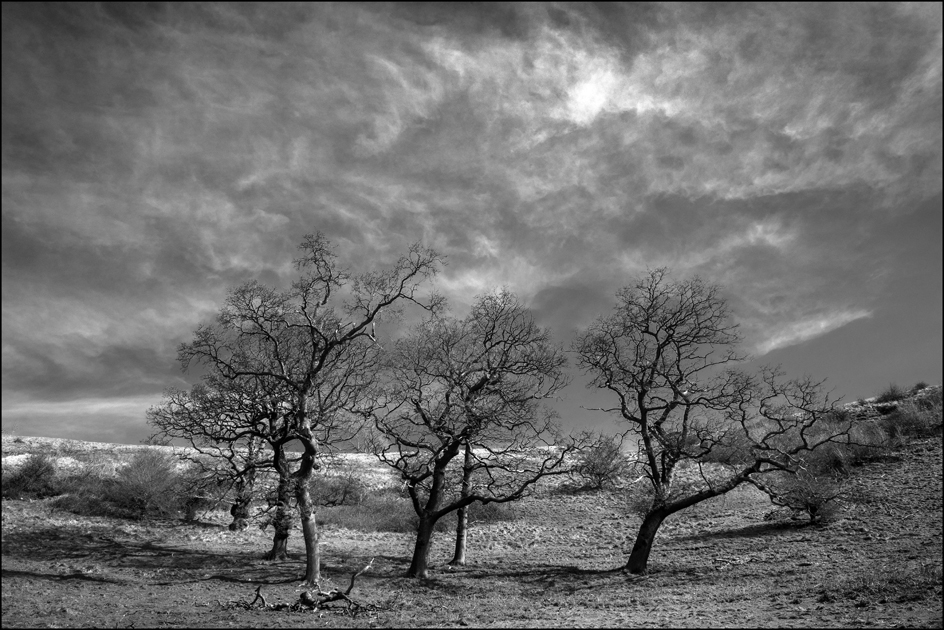
Photography: © John Stadnicki, 2020

Original music ‘Vide Cor Meum’ © Patrick Cassidy and Hans Zimmer for ‘Hannibal’ (2001).

SOMNIA Knives, Forks, Spoons Press / Sep. 2019


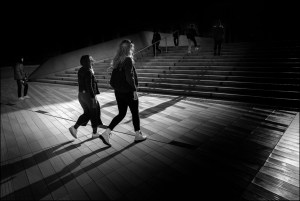
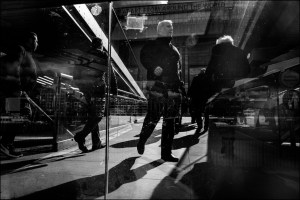
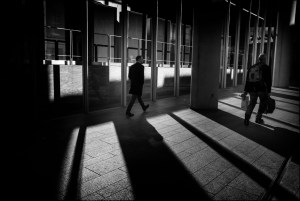
Gloucestershire in Lockdown, April 2020

Photography: © John Stadnicki, April 2020


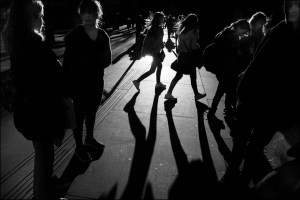
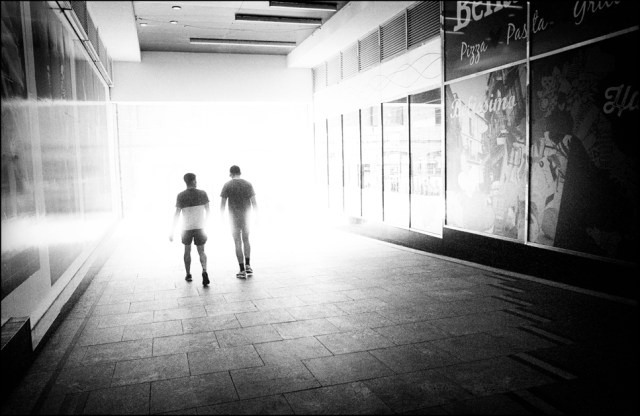
The photographs were taken on the way to local shops in Stroud and Gloucester, Midlands, Gloucestershire, UK. 1-2 April 2020.

Gallery

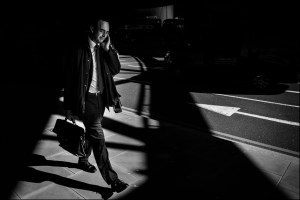
City Life: London

© John Stadnicki 2020

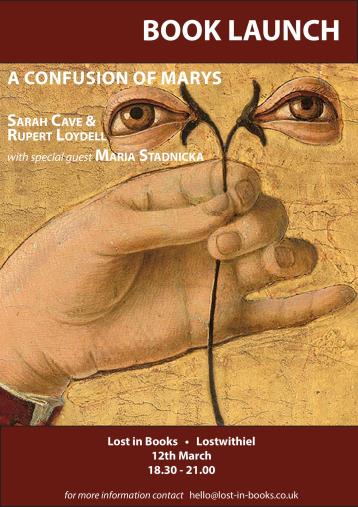
Lost in Books in Lostwithiel


Come to ‘Lost in Books’ for the launch of A Confusion of Marys (Shearsman Books) w/ Sarah Cave & Rupert Loydell & featuring Special Guest Poet, Maria Stadnicka. Doors open at 6.30pm.

RUPERT LOYDELL is Senior Lecturer in the School of Writing and Journalism at Falmouth University, a writer, editor and abstract artist. He has many books of poetry in print, including Dear Mary, The Return of the Man Who Has Everything, Wildlife and Ballads of the Alone, all published by Shearsman, and Talking Shadows from Red Ceilings. Shearsman also published Encouraging Signs, a book of essays, articles and interviews. He has also authored many collaborative works, several with Daniel Y. Harris; and edited Smartarse and co-edited Yesterday’s Music Today for Knives Forks & Spoons Press, From Hepworth’s Garden Out: poems about painters and St. Ives for Shearsman, and Troubles Swapped for Something Fresh: manifestos and unmanifestos for Salt.

SARAH CAVE is a writer and academic living in Cornwall. She is currently working on a practice-based PhD in Poetry at Royal Holloway. Sarah has published two pamphlets and an illustrated chapbook, like fragile clay, published by Guillemot Press. She has published two collections of poetry, An Arbitrary Line (Broken Sleep Books) and Perseverance Valley (Knives, Forks and Spoons Press). Sarah’s poetry has appeared in numerous journals and anthologies including Oxford Poetry, Tears in the Fence, Shearsman and Eborakon.

Lost in Books is an independent bookshop in Cornwall, United Kingdom. You can find further information about it, here. The address is Lost in Books, Quay Street, Lostwithiel, Cornwall, PL22 0BS, UK.

© Lost in Books


© Maria Stadnicka 2020

Review ‘Somnia’ / Alan Baker for ‘Litter Magazine’

SOMNIA Knives, Forks, Spoons Press / Sep. 2019

“Somnia” by Maria Stadnicka, pub. KFS. 74pp. £10.00

Maria Stadnicka was an established poet in Romania before moving to the UK and gaining a reputation as an English-language poet. This collection is therefore resonant with European and modernist echoes; the text references Camus, Symborska and Emil Cioran, among others, and the influence of surrealism is evident throughout the collection. The poems are written in the plainest language, without much rhetorical embellishment; and yet, as in the best poetry, the meanings are hard to pin down and the poems have a depth of field which stays with the reader after the book has been put down. The poems address war and dislocation in an unnamed land which could be many places, but reminds the reader of the Balkans conflict of the 1990s. The encounter between everyday life and shock of conflict is presented in a dead-pan tone:

On both sides of the frontline,

orchards bloom.

People buy and sell goods,

occupy central squares…

Business as usual.

Gunshots, grenades, mortars.

(from “Landscape with Buses”)

Everyday scenes have a sinister air, enhanced by surreal imagery:

I went to town and took pictures

of people in queue at the shopping mall…

The sun kept in its corner and watched

the autumn busking indoors

when a beggar stopped, asking everyone

for directions to the nearest abattoir.

(from “Particulars”)

The poems are clearly ‘about’ something; the encounter between warfare and everyday, often banal scenes from normal life, and the trauma of flight and dislocation. But this is not plain reportage, and whatever political message it carries is delivered with a lightness of touch that doesn’t propagandise or browbeat the reader. On the contrary, these poems are understated and retain an air of mystery; they give us insights into lives and experiences that couldn’t be delivered in any other way except in poetry. They also encompass the guilt and powerlessness of those viewing events from a distance:

…to become responsible

for a bullet wound, though we have

no memory of ever using a gun,

in the name of each person wishing to be free.

(from “The Gift’s Legacy”)

Many contemporary poetry books have a ‘theme’ – maybe it’s something suggested in creative writing classes – and so often the theme becomes more important than the poetry, leading to predictable and programmatic writing. That’s not the case with “Somnia”. The poetry remains poetry, its light lyricism and pleasure in words defeating attempts at literal interpretation. Here’s the complete poem “Mundane Evil”:

There was a wake going on

in a floor crack. So much old wood

talked back in mother’s tongue

through the opening that I thought

to wait longer for the right moment

and then a close friend pointed out

the rupture took shape, got wider.

My womb coughed out pieces of rubble.

This is a strange poem. The last line could be seen as a metaphor for the perpetuation of violence from one generation to the next, but that’s only one interpretation, and in fact the line, and the whole poem, is elusive and mysterious and strangely compelling. The remarkable thing about this collection is that it tackles the very specific issues of violence, dislocation and trauma in language that is as elusive as that in the poem above. It is poetry rather than documentary.

Stadnicka is not a native English speaker, and it’s interesting to speculate on the properties of poetry written in a second language. In an email to the reviewer, Stadnicka had the following to say in this subject:

“I suppose … my poetry is ‘other than British.’ The metaphoric range is different, the feel might be different, even though I use the English language when I shape my poems.”

What might “other than British” mean? One thing already mentioned is the influence of European modernism and of surrealism, that latter being a movement that never really took firm hold in British culture (the poetry of David Gascoyne notwithstanding). Another feature might be the quality of the language. The flat tone and plain expression make the description of the subject matter that much more powerful and lacking in any sensationalism. There are no poeticisms, and that may be one of the benefits of coming to the language afresh, from a different linguistic basis. It’s hard to imagine someone raised in the UK having written poetry like this. In the same email, Stadnicka says:

“It is impossible to discuss my writing without considering the impact oppression and dictatorship had on me as an individual. Once you experienced life in an orphanage with children dying of AIDS, or you are woken up at midnight to take part in a practice drill for an eventual nuclear attack, once you experienced dictatorship, there is no turning back when writing.”

This is outside the experience of most UK-raised poets; it inevitably affects the poetry, and therefore adds something new to British poetry in addition to the cultural influences mentioned above.

The poems are short and have individual titles, but the collection has a broader architecture; it’s divided into four ‘movements in F minor’ and has an epilogue and a prologue. The overall book is dedicated “to Cain and Abel, and all their neighbours”. The prologue is in the form a witness testimony, and the epilogue is also addressed to “your Honour”. So the book – to put it grandly – is putting humanity on trial. The four movements have distinctive features. The first movement, allegro, introduces us to world of dislocation and conflict, in which “the bullet hits the edge of my book / then sinks into earth like a poem”. The second movement, largo, slows the pace down and shows us a more personal side to these experiences: “When I collected my father’s ashes… I thought to keep them hidden in a pencil case”. The third movement, scherzo, addresses the ways in which art confronts the experience of war; there is a poem called “Kafka”, and another, “Lieder for Two Pianos” in which “half-swallowed lullabies found you / growing hazel-eyed whispers inside my body”. The last section is called “finale” and deals with consequences:

         Orphans but free, the cloth says

then keeps talking to me

about the people I once loved,

who vanished during a blast

as if they had never existed.

If the description of the four movements above makes the collection seem formulaic, this is certainly not the case. This poetry is mysterious, and individual poems can have an almost spiritual effect, like  Zen koans or proverbs. In the last movement, the title poem “Somnia” gives us an executioner falling asleep “with his back against a sharp blade”. In this poem, the violence comes from sleep and dream, and therefore from the human sub-conscious. The poems throughout the collection have a dream-like quality, and despite their directness and plain-speaking – or maybe because of it – offer a sense of mystery, and psychological insight.

© Alan Baker 2020, ‘Litter Magazine’ 1st March 2020.

Somnia is available at Knives, Forks and Spoons Press and pre-order here.


Geometry


Nietzsche insists that a person must
find at least one truth before a good
night sleep. A terrible prospect
considering how facts come about,
with their own sets of variables.

wind force,
speed in metres per second,
momentum at impact with a surface,
temperature
and friction between molecules

Ninety-degree angles do not exist
in real life. Until now we have been tricked
by scientists into believing in verticality.
Meanwhile they build a simplified version
of the world, a dummy manual, if you like,
for funding purposes.


© Maria Stadnicka 2020

Published in ‘International Times’ on 29 Feb 2020.

Rite

Sunday lingers on scent of paint,
tobacco and spring. Our kitchen-war
sprouts from a conversation on books
about people we both know. I say

I’d met doctor Zhivago queuing
at Nero’s, heard him asking a barista
about the fate of taiga-trees
at the height of a mining season.

You think they are cut short then stop
growing. I lock my paperbacks
in a cupboard; they remind us
of all the ink twisted in verse, seeded

in layers of gravel. Our verbs reach
the pit of a quarry and seal over.
Snow forests shoot up in tears,
we trip over cables in our flat.


© Maria Stadnicka 2020

Published in ‘Stride Magazine’on 26 Feb 2020.


Gallery

Wales 2020

Power to the Powerful

At some point in 2017, travelling from Germany to the UK, via France, I made an overnight stop in Calais. This is my diary note, dated 24th August:

Two years since I last visited the ‘jungle’ camp. I don’t see migrants around the French Docks anymore, as the temporary camp was demolished. Bulldozers flattened down tents donated by NGOs, improvised kitchens, food distribution points, and the school built out of cardboard and polystyrene. Silence surrounds the old site. A silence I encounter in Calais, at the border check points, in the media. It measures our collective dissociation from tragedy, the anonymity of Syrian refugees’ stories, the anonymity of their predicament. Where have the Syrian people manage to settle? Far North, further South?

The refugees came and went. In and out of history, their tragedy captured the West’s attention for as long as their presence disturbed the flux of goods and tourists at the French border.

But history is unforgiving and it does not forget. Diplomats, academics, politicians, strategists are currently gathered at the Munich Security Conference, taking place in Germany 14th-16th February. The conference’s agenda covers talks and debates around energy, food, climate and internet security, as well as travel, investments and foreign policies. It is an attempt to re-think the European priorities, at times marked by insecurities brought on by the Covit-19 outbreak and the economic trade volatility. I would have thought this is an important enough event to require British diplomatic presence, but unfortunately, the UK is missing the event altogether.

This morning, in an interview for BBC Radio 4, David Miliband, former British Foreign Secretary, currently CEO at International Rescue Committee, expressed his disappointment at the lack of vision in British politics and the inability to work towards a wider European / global scope rather than obsess over its own short-term goals. I can probably understand Miliband’s bitterness though Milliband is there to represent the interests of his own NGO, while I’m drawn to a debate item placed on the first day’s agenda: Human Security and Westlessness.

There is a strong sense that Western democracies are beginning to see their power and influence fading, overwhelmed by complex global issues which require solutions based on vision and multi-national collaboration. To put it plainly, the West has started to understand that ‘the cold reality is not that autocracy will triumph and democracy will fail, but rather that the 500-year-long era of Western global supremacy is coming to an end’ (Barber, 2019). One could go even further and say that the West has lost it’s power with the rise of populist nationalist ideas, based on hostility to immigrants and protectionist economic interests. Francis Fukuyama (2019) sees the current climate as a ‘fundamental mistake’ that facilitates abusive use of power and threatens the liberal order.

Populist nationalist ideology brushed under the carpet the tragedy of thousands (if not millions) of Syrians who find themselves displaced all over Europe by war, destruction and famine. Displayed and begging.

In Britain, for instance, 45,255 Syrian refugees are waiting for an initial decision on their asylum applications, and more than half have waited for longer than six months already (Refugee Action, 2019). This is a symptom of a diseased bureaucratic system which serves its purpose well: to keep powerful institutions away from the citizens that they are supposed to protect and serve.

Nonetheless, real power is not in institutions but in the people that support institutions. Real power is in the small action which makes a big difference. Real power is about remembering, not forgetting, tragedy; it is about engaging resources to support lives and communities, not bureaucratic interests. As the silence coming from top level politics  reaches epidemic proportions, I begin to understand that forthcoming governmental priorities will ignore issues concerning people, and will concentrate on managing databases. And if nobody keeps on talking about it, if nobody keeps the pressure on the decisional factors, the Government’s job will soon be nothing but a walk in the park which  serves its own interests. Silence empowers bureaucracy and kills people.

© Maria Stadnicka, 15 February 2020.

Published in International Times on 22 February 2020.


References: 

Barber, T. (2019) Rise of autocracies spells end to the West’s global supremacy. In: Financial Times, 6 November 2019. Available from: link.

Fukuyama, F. (2019) in: Spear’s, Arun Kakar: Francis Fukuyama on Trump, and why Brexit could be the end of Britain, 25th September 2019. Available from: link.

Munich Security Conference 2020 agenda available from here. The conference is live-streamed here.

Munich Security Report 2020 is available as pdf. doc here.
Refugee Action UK (2019) Press Release. Available from link..

Short Summary of Strategic Combat

Illustration © Claire Palmer 2020

after Kasparov vs Karpov, 1986


The playground is open, with white to move.

D4 F6. A few pawn boys make a safety zone

out by the swings, waiting for Father to fall for the ruse.


C4 G6. Everyone calls the queen Sis’ Loretta

when she jumps over the Treatment Room’s steps

to the battlefield. The fifth move: Q to B3.


By the eleventh round, the game enters

a phase of hand-to-hand combat. Father attacks,

we defend on each side. Sister gets hurt,


two pawn boys, sacrificed, but nobody castles.

Our fight, bishop to rook. Checked on the playground

as the last knight falls at the match point.


Most pieces are gone on both front lines. Thirty-one

moves. Checkmate. From the opposing team,

Father says we are playing a game bigger than us.


© Maria Stadnicka 2020


Published in ‘International Times’ on 8th February 2020.