On the Treadmill

I have come to recognise God in a violent song,

played in the evening with broken forks and knives.

If I refuse to kneel, the winter starts at the end of September,

on Tuesdays, when I pass by the Jewish quarters.

My road to confession starts, just the same, in the morning chill.

The stones, the trees, the sky have a message,

of that I am certain, arrived at the wooden door of the hermitage.

And I knock and I knock.

A raven finally opens the white background.

The raven says with calculated words that, at present,

this government is busy.

Important wars need attending, in a land like no other.

I am given a form and I hear the padlocks.

I jump on the treadmill to keep warm.

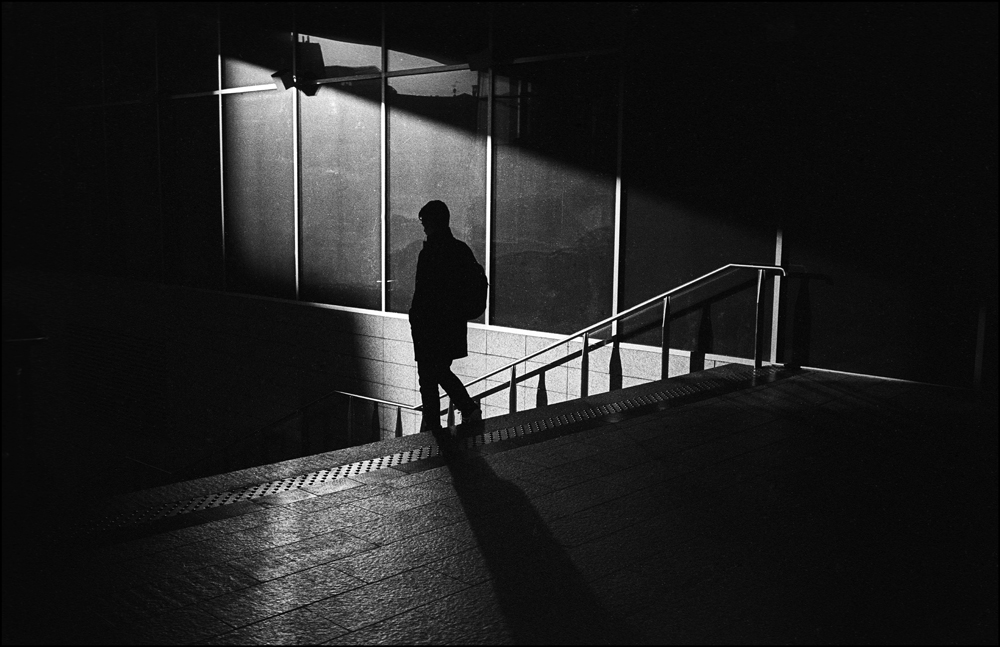
the-quays-3


Photo: copyright@John Stadnicki, 2016

Statistics of a Nihilist

27


The post delivered only one Christmas card this year. Not that it matters.

I received three phone calls from friends this year. Not that it matters.

Nothing I write has any consequence. The world carries on as before. 

However, I have given everything to everyone else.


Silent Country

On the wall opposite my bungalow

a blue advert drips on a stationary boat.


The sea is far away, overcrowded.


The acid rain dissolved the bold letters

which used to show my direction.


I have no choice but to stay vigil

behind this lighthouse

waiting for another explosion.


Do you see what I see?

We arrived, at last, at a dead end

a few souls making plans at a bus stop.

All that talking led us cattle to slaughter.

clock-1

On the Move

piazza-gae-aulenti-milano-2
If the time reflects on us
such a terrible burden,
we pretend that it is
only one way out but
it is simply not true.
Not allowed to assume the world on the move,
not allowed the reality of an argument
we might have had with Nietzsche before bedtime.
Now, when a revolution is almost unavoidable
the children endure for us
the refusal to kneel down
in a confession which faces a wall, not a god.

Games During the Cold War

The winter Clara and I secretly discovered socialism

we had nothing left in the house

that was worth burning.


The frost surrounded the bedroom,

we talked to keep warm

and I suggested to write on the walls.


We used the kitchen knife to sharpen crayons

and kept at it for a couple of hours.

‘All western countries, enemies of the people!

Kill the foreigners!

Kill Ronald Reagan!’

I thought Ro-nald was such a bad name

for a man who never wrote children books,

probably he deserved to die.


My spelling was not very good at that age,

so the room filled with rainbows instead.

Clara and I laughed.


At that point, we felt hungry and I remembered

mother kept the bible covered with cloth

on top of the fridge

so I lifted the shiny red cover, sliced it in very small pieces

and added water and salt.

The feast carried on for a bit.


Clara and I chewed with determination several chapters.

We almost got half way through

when I read: ‘Then there shall be a time of trouble …for

every one that shall be found written in the book.’


And then, in the middle of our small apartment,

the game stopped.

I went back to the wall

and changed the words around.

‘Ro-land, orphan but free’.

piazza-del-duomo-milano-2


Photograph: @John Stadnicki, ‘Piazza’, 2016


No Other Survivors

I sit by the emergency exit

at a neat desk

in the office with

neat plastic flowers.


Freshly baked people buzz

empty in black and white.

A typed frozen password on my screen: bonjours tristesse number eleven.

It keeps snowing in Russian.


A nest arrives.

Hollow roundness.

At my window, a kneeled motionless pigeon

is picking and picking at my praying crumbs.

No other survivors.


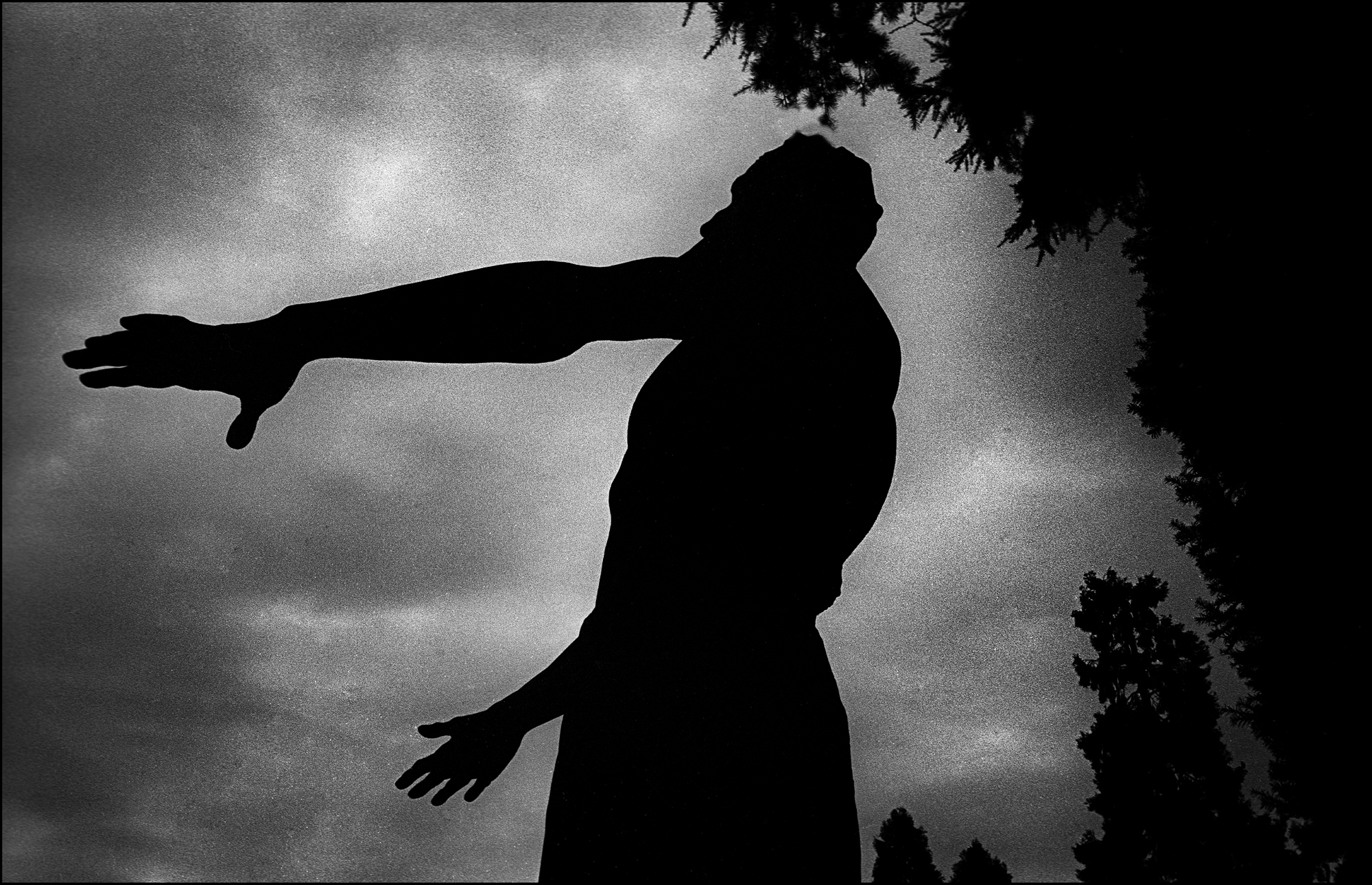
cimitero-monumentale-milano-1


Photography: @John Stadnicki, ‘Cimitero Monumentale’ 2016

Bad Luck

The other day I had a fall in the bathroom

and cracked two ribs.

I have a black eye and a swollen knee.


Google says I should end up with a persistent cough and

the doctor recommends to avoid

laughter, hic-ups, children, smiling people.


Yesterday, I burnt my left hand with boiling steam,

I cursed and dropped the kettle on the floor,

then smashed the kitchen window with my fist.


Today I am definitely going to die so

I have now set fire to the house

ready to lie in bed wrapped up in wet blankets.


My next door neighbour pops by to say that

winter is about to settle in and

he ran out of tea bags.

Short Love Letter


Dear local MP, a while ago I vividly remember

writing you a very short note to say ‘fuck it, I quit!’.

I licked the stamp and dropped the envelope

in the box number eighty four, school lane, first left,

by the traffic lights.


I ran back to my flat, unplugged the TV

and read ‘War and Peace’ under the duvet covers.


By the time I got to page seven hundred and twenty I’d realised

the war was not the most important thing in a man’s life.

I started to feel a bit sorry for myself

having nothing to be angry about anymore.


But now, coming to think of it, you gracefully got over the insult

and posted back a signed Christmas card.

It arrived in January but let’s not stop at details.


I kept at my book for over a month.

The French got stuck in Siberia,

the women mourned, the men went back home

as they did in those days.


And then a neat Valentine appeared

hand-delivered by a Romanian postman.

Your concern for my love life brings me to tears.

There is nothing worse than rejected love.

Soldiers

The dreadful day we had feared

arrived at last. Possibly March the first.

At the picket line.

We held hands with the same familiar tenderness

maybe shared the same memories witnessing

the course of events as the revolution unravelled.

With a kind of regret my fist hit

the walls of a prison surrounded by weaved carpets.

With photographs stored in books

different directions awaited.

Never to see each other again.

mm

Of Hats and Social Change

It might be that the Panama Papers will become as iconic in history as the fashionable Ecuadorian ‘panama hat’; a striking and a bit ostentatious item, which everybody wants but nobody knows how to properly wear it. Not in Britain. For obvious climatic restrictions.


However though, on Monday morning, Britain received such a hat, delivered by the mediatic postal service, whilst not wide awake yet, post Easter holiday, when the weather forecast was not that brilliant anyway. Would it worth the bother, for the sake of seven or eight hours of sunshine a week? Should it return to sender and have the money back?


The British rich and the poor found out, with some surprise, that once they had signed for the goods, the sender remained unknown. And, as the box opened, millions of other items emerged. Things which we all ‘kind of’ knew about, but wished we hadn’t. The truth.


The shock of discovering your master licking his honey smeared fingers in your own pantry. The shock of being discovered and still trying to say ‘sorry it won’t happen again’ type of thing.


In a society where the wealth and the poverty cohabit undisturbed, in their own universe, parallel with each other, it becomes increasingly difficult to formulate an opinion about social injustice, corruption, and privileged few. Almost impossible to do something about it. This explains the public opinion’s delayed reaction to the recent ‘Panama Papers’. But does it justify it? And even if, let’s say, something could be done about it, what resolution would not involve fundamental change and transformation, on both sides?


Given the realities of international and national politics, each of us is, to some extent, victim of conflicting demands between truth and power. Observers of social reality, rather than makers of it. Furthermore, the unfortunate circumstances, which define the current trends, deepen in a climate where radical thinking and critical debate do not address the core values on which we built our social structures and institutions.


With the current revelations in mind, it is rather justifiable, once more, the duty to bring in focus the possibility of change, which, ‘to some extent’, comes from our desire ‘to create the future rather than merely observe the flow of events. Given the stakes, it would be criminal to let real opportunities pass unexplored.’ (Noam Chomsky, 2014, ‘A Genuine Movement for Social Change’)


20140118-183227.jpg