©Ólafur Arnalds 2013, Music video by Ólafur Arnalds performing Only The Winds. (C) 2013 Mercury Classics, a Division of Decca Music Group Limited
Landscape with Buses

On both sides of the frontline,
orchards in bloom.
People buy and sell goods,
occupy central squares,
dogs run after barefoot children
with grain baskets – linen flags.
Buses on schedule, taxis in queue.
Business as usual.
Gunshots, grenades, mortars.
Stray barks come out of houses
with blown-up windows. Splinters
rising – morning’s canines.
Soldiers wake up to the call to prayer,
switch radio on, shave by the roadside.
Nametags rest in shoe polish tins,
heat bakes bread already sliced.
Buses carry wounded further inland.
Poem published in Sweat, Ink and Tears, 8th Jan. 2019, available here.
©Maria Stadnicka, 2019
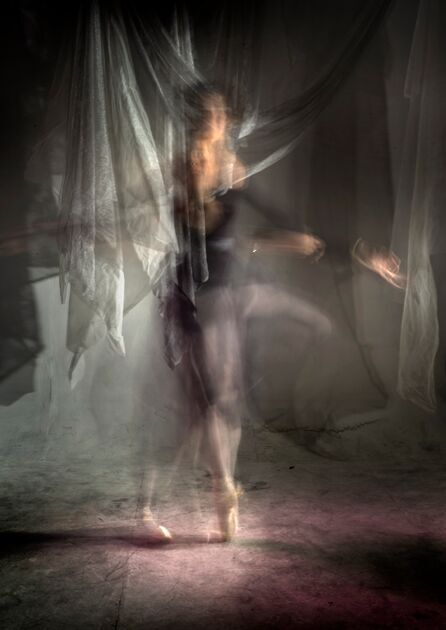
Bolshoi Rehearsal

Photography: ©JStadnicki, ‘Studio’ 2018
53.2. Numbers blink, red dots on scales
show my thighs have grown
by two-hundred grams. I open the window.
Adverts for drama productions hang across skies,
a heavy woman squeezes against glass
to make room for me.
For lunch, I swallow crushed ice,
wood shavings, a full glass of tap water;
jump on the treadmill: thirty-eight minutes,
three-point-two miles, three hundred calories.
Lost two-hundred grams.
A neighbour rings, invites me to dinner
saying the man living at number four died
hit by a bus on the way to the gym.
He was 73 kilos. I am 53.
I stop eating protein, google public transport
routes, pick-up times for stones-pounds.
Every day at 9:45, a stout driver reminds passengers:
‘No hot food at the back. Only light snacks.’
Indoors. Drawing jogging maps
on steaming shower curtains.
Shampoo waves on my striped ribcage.
Sea splashes away in the bathroom.
Sand grains hide in my shoe.
©Maria Stadnicka, 2018
Poetry Night @Stroud Book Festival 2018
Orbita – Reconfiguring Contemporary Dialogue
Orbita: The Project, Semyon Khanin, Sergej Timofeyev, Vladimir Svetlov, Artūrs Punte, translated by Kevin M.F. Platt with colab. (166pp., Arc Publications)
Orbita is a creative collective/group of Latvian poets writing in Russian which attempts and succeeds to reconfigure the contemporary dialogue between culture and creative genres. This refreshing poetry collection is an unpredictable Latvian cultural project rather than a straightforward poetry anthology; a cross between concrete poetry, poetry installation and art gallery.
In terms of historical anchors, Orbita invites me to revisit directions proposed by the Black Mountain School and then look back at the British movements like the Gloucester Movement, the Westminster Group and the Scottish group headed by Ian Hamilton Finlay. However, the achievement of this innovative and remarkable anthology comes from the precision with which the four poets define, as Tony Ward mentions in the preface, a cultural path ‘the UK poets of a half a century ago dreamed of but never achieved.’
Semion Khanin, Sergej Timofeyev, Vladimir Svetlov and Artūrs Punte write in Russian and their work is translated by Kevin Platt in collaboration with many other translators and academics. A mark of the project’s complexity and relevance, as well as its polyphonic orchestration.
In Orbita, nothing should be excluded; each poem, photograph, installation are equal attributes in an unitary aesthetic discourse. The humour is dark, with vibrant tones reflected in linguistic choices:
do not think he is homeless
he simply lost his keys
and for the past four months he’s been sleeping
in front of a furniture store.
(Semion Khanin, p 28)
Khanin sets the anthology’s visionary axiom placing the reader at the centre of his preoccupation, as both reader and poet are ‘surrogate brothers and sisters / related by reason.’ (***, p. 18) His intention is to ‘tell you a story from when I was still a burglar’ (p. 19) but the story unfolds ‘in state of zero gravity’ when ‘motionless on the sofa / and everything within fogs up with your breathing’. (p. 30)
The deictic centre expands with Sergej Timofejev and becomes spatial deixis. The locative space is the world where:
a dog softly barks
at a passing cyclist.
With restraint, the weather grows worse
and the barn falls apart.
Water pours modestly from the tap
not splashing and disappearing in the drain almost at once’
and where during a radio interview ‘a pianist answers every question
with ‘yes’ and no.’
(‘Morning in a Land of Introverts’, p.35)
Timofejev’s preoccupation to formulate the daily existence’s boundaries emerges, indoor again, when observing the quotidian. The present is defined by isolation, routine and angst:
I got to my own place and went to bed.
Woke up in the morning; it was Monday; and I lay face down
On the pillow and waited, but nothing special was happening;
So I got up, showered and went to work.’
(‘Quiet God’, p.36-37)
And so is the literary world:
Write me a novel
That will tell of another novel
All the same I’ll read neither one nor the other –
I’ll depart for Manchuria and perish for nothing.’
(‘Popular Song for Ukulele’, p.45)
Vladimir Svetlov who focuses his poetics on the practical aspects of consumerism similarly negotiates this metaphysical drive:
like a gift for loyalty
to repeat customers
we have been given these days
(‘Hit Parade’ p.63)
Svetlov’s discourse is direct and urgent, placed as critical question about the meaning of our contemporary socio-cultural preoccupations: ‘have you noticed we use the word “to tell” about posts in FB?’ His irony poses a destabilizing threat to our hierarchy of values…[the full review, in Stride Magazine.]
©Maria Stadnicka, 2018
Stroud Book Festival Poetry Night, 9th November, 7.30pm

The Stroud Book Festival is thrilled to once again be hosting an eclectic line-up of poets and poetry from Gloucestershire and beyond.
The first poet on the bill is multi-award-winning poet and broadcaster, Daljit Nagra, on Thursday 8th November at Wycliffe College, one of the festival’s splendid sponsors. Nagra, who was the first ever poet in residence at BBC Radio 4, will be reading from his latest book, ‘British Museum’, as well as earlier books, including the Forward Prize-winning ‘Yes We Have Coming to Dover!’
“He’s a marvellous reader of his work,” says Adam Horovitz, who will be introducing him on the night, “and his questing, questioning, witty and politically pertinent poems are well worth discovering aloud as well as on the page.”
On Friday 9th November, the Stroud Book festival Poetry Night offers up a wonderfully varied and immersive evening of readings, performance and music by a hand-picked bill of acclaimed poets, in two parts.
The first part brings together three poets with Gloucestershire connections: Kate Carruthers Thomas, Patrick Mackie and Maria Stadnicka. It closes with acclaimed Welsh poet and singer Paul Henry and will be compered by Adam Horovitz.
“On Saturday 10th November we’ll be celebrating the work of Gloucestershire poet and composer Ivor Gurney with a one-woman show starring writer and actor Jan Carey, to mark the 100th anniversary of the end of World War One,” says the festival’s artistic director Caroline Sanderson. “Author, Composer, Soldier-of-a-sort: The Life and Work of Ivor Gurney is fresh from an acclaimed run at the Edinburgh Fringe this summer and we are delighted to bring the show to Stroud.
“We round off our poetry programme on Sunday 11th November with a magical family event inspired by nature,” adds Caroline. “We hope that children of all ages will come and meet Frann Preston Gannon, illustrator of the poetry anthology I-am-the-seed-that-grew-the-tree.
“It’s a glorious new gift anthology of 365 nature poems for children, spanning over 400 years of poetry, and including the work of poets as diverse as William Blake, Roger McGough, Carol Ann Duffy, John Agard, Eleanor Farjeon and William Wordsworth. As well as a chance to enjoy the poetry-telling, Frann will be encouraging children aged 6 and above to create and illustrate their very own nature poem.”
How to book tickets:
In person: at The Subscription Rooms, Stroud
By phone: by calling 01453 760900
Online at https://stroudbookfestival.org.uk
Hollow Wean

Dear Sir,
a beauty company sent me an email,
‘We win, you win’ it said, invited me
to purchase youth serum at half price.
There is something I hate about emails
sitting black on white on screen:
comma after verb easily mistaken for
philosophical pause or breath taken
when reading poems aloud.
‘Please, do not reply’
it carried on ‘we hope to see you again.’
I have a hundred things to do but
rush to the bathroom to see how deep
the line cutting my glabellar region
has grown since I last checked.
A fair amount I notice. Others joined
the frontal network, showing people
how much I’ve won in forty years
of living too small, dreaming too big.
©Maria Stadnicka, 2018
Minor Voice

Photograph: ‘Air – 2018’, ©JStadnicki, 2018
to Robin Wheeler
…………………………………………
I saw a man leaving a water glass
at a junction where the elm tree,
he used to know,
had been suddenly cut down.
…………………………………………
©Maria Stadnicka, 2018
Poetics

©International Times, 2018
I had a disagreement with a poetry master
about wolves. And talking made me think
that I, too, had the same great fear
of living forever, but said nothing.
I remained held up by my feet and a tree
came out of my mouth. It hurt badly.
More than a lost war, more than lies.
The poet moved to the left, locked himself
in a room with many doors but no handles.
Outside, his wolf guarded meat-eating days.
Mine wanted to jump from a cloud
straight into the blank page, but waited.
A child passed by and said to me
that wolves did not exist on paper. Only in flesh.
Text published in ‘International Times.’
©Maria Stadnicka, 2018
Your Stripes Represent My Future

There are a few things I don’t care about. And one of them is which royal is going to give birth to which royal. As my friend, Mickey Mouse, used to say in his song…
I remember you was conflictin’/
in a black dress under a white coat /
and I fought /
that face I’ve seen somewhere else /
in a movie about the abuse of power.
La, la, la, la, la, lah!
Those around me keep on running /
I stand and convince myself /
the stripes I’ve got represent my past /
but yours /
represent my future.
La, la, la, la, la, lah!
No chance in the doggy-doggy fight /
I’m convinced /
that dress is bullet proof
I’m convinced it’s against repetition
and revolution and honesty.
That dress is against me, babe!
Further information, in International Times.