Thought

Tomorrow will come with a sunny spell,

the rain will stop at the border so

we will begin the long-waited rebellion,

as they say,

at the right moment.


To satisfy our need for greatness,

we will politely ask the just questions and

sit on the pew

in return for the hand-written answer.


We will finally go home,

or so we believe,

to master the only remedy left for pain – patience.

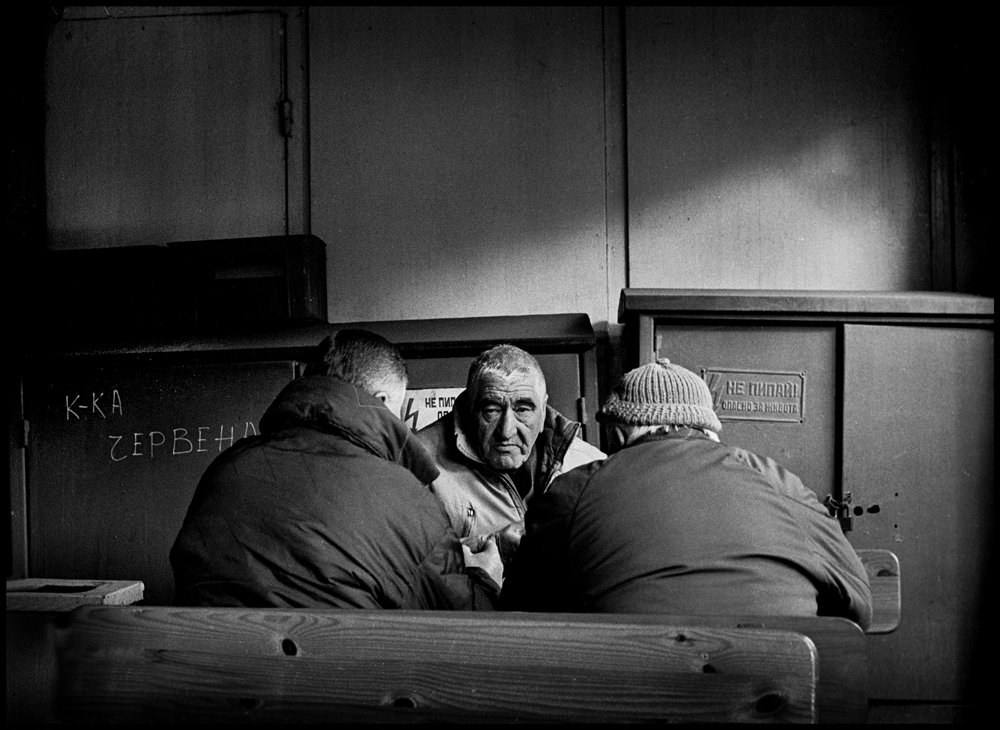
street-cafe-2

Photograph: @John Stadnicki, ‘Street Cafe’

Thought

In a country where all books are forbidden,

the hurricane spits out a new world

with a new legacy of destruction.

People stop by the house with a light on and a blue door,

the house with boarded-up windows where

the mandolin player keeps an eye

on his own basement revolution.

These are the days when the truth learns to

travel on cigarette papers, between prison cells,

before the police arrives

to evacuate.

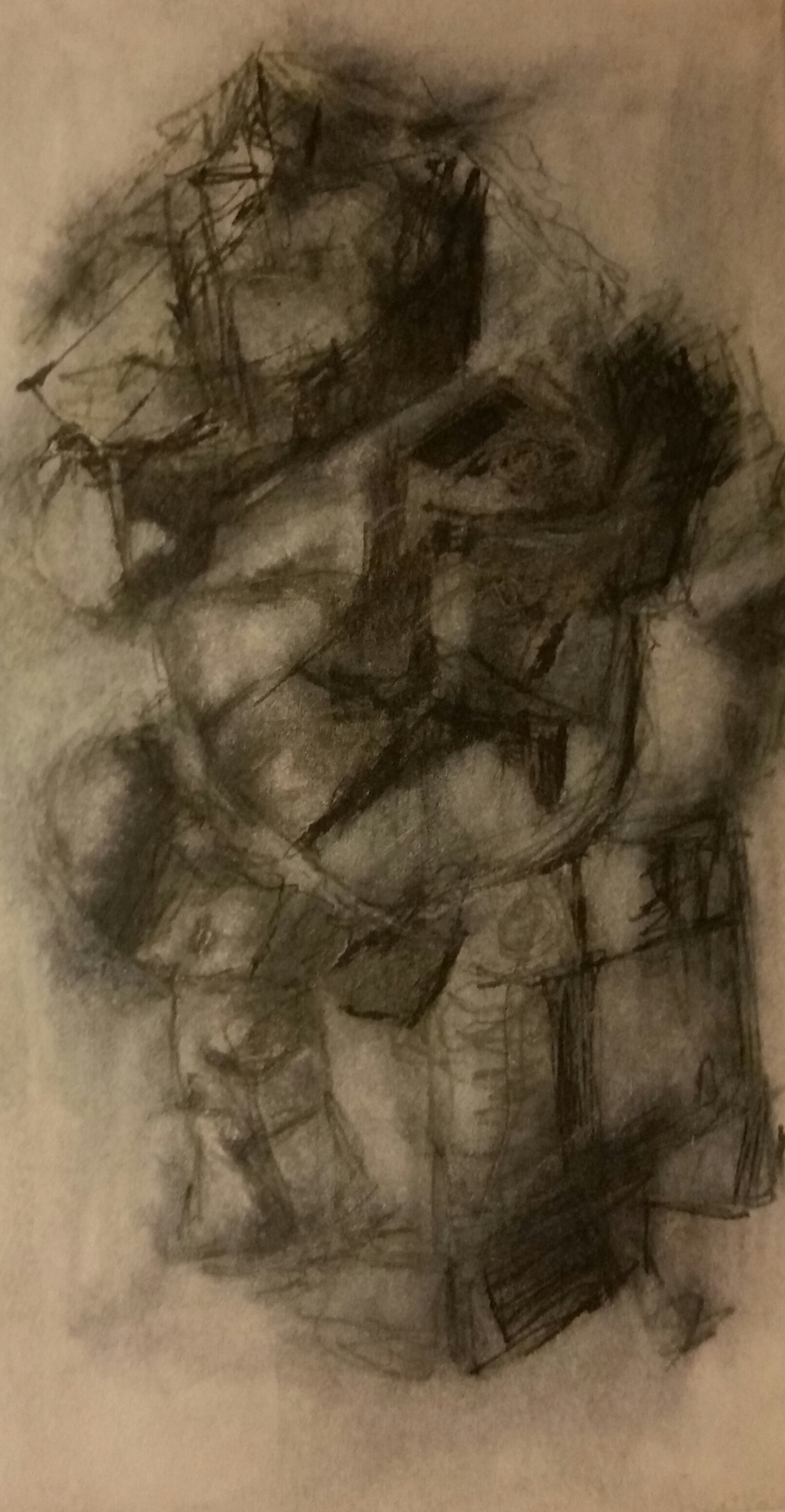
20161028_190421-1


Ink on paper: ‘Fisherman’, Maria Stadnicka

Exile

leave-2


Witness to a repeated history

in exile I learn a new language

facing the border control

at Heathrow Airport I wear my mother’s coat

ready for a winter of politics

when I need to

I keep my mouth shut I change my name

to look just like her

white and uncomfortable

the blinding sun has been washed and

smells of violets

people are happy

in such a beautiful land

nobody minds me

amongst

wrapped-well-packed boxes

brushing the dust off velvet cutlery

the only remains

of life before baptism.

centrale-fs-1


photographs: copyright@John Stadnicki, 2016

In Other Words, Freedom

The fatal morning Europe woke up and thought it had something to say,

there was nobody else left in the world able to listen.

Oh, earth, the bones had gathered to queue for bread,

by the front door at Saint Joseph seminary.


An ordinary day for ordinary death.

The bakery opened and closed.

The workers arrived on time for a last shift then went home.

The ovens had no traces of grain.


The ink stained hope filled up rusty water pipes.

The crowds’ whisper went on, up the hill, out of the city.


After that, freedom meant nothing.

It all came down to

who could hold the front running place the longest.

_dsc7422

Silent Country

On the wall opposite my bungalow

a blue advert drips on a stationary boat.


The sea is far away, overcrowded.


The acid rain dissolved the bold letters

which used to show my direction.


I have no choice but to stay vigil

behind this lighthouse

waiting for another explosion.


Do you see what I see?

We arrived, at last, at a dead end

a few souls making plans at a bus stop.

All that talking led us cattle to slaughter.

clock-1

On the Move

piazza-gae-aulenti-milano-2
If the time reflects on us
such a terrible burden,
we pretend that it is
only one way out but
it is simply not true.
Not allowed to assume the world on the move,
not allowed the reality of an argument
we might have had with Nietzsche before bedtime.
Now, when a revolution is almost unavoidable
the children endure for us
the refusal to kneel down
in a confession which faces a wall, not a god.

Games During the Cold War

The winter Clara and I secretly discovered socialism

we had nothing left in the house

that was worth burning.


The frost surrounded the bedroom,

we talked to keep warm

and I suggested to write on the walls.


We used the kitchen knife to sharpen crayons

and kept at it for a couple of hours.

‘All western countries, enemies of the people!

Kill the foreigners!

Kill Ronald Reagan!’

I thought Ro-nald was such a bad name

for a man who never wrote children books,

probably he deserved to die.


My spelling was not very good at that age,

so the room filled with rainbows instead.

Clara and I laughed.


At that point, we felt hungry and I remembered

mother kept the bible covered with cloth

on top of the fridge

so I lifted the shiny red cover, sliced it in very small pieces

and added water and salt.

The feast carried on for a bit.


Clara and I chewed with determination several chapters.

We almost got half way through

when I read: ‘Then there shall be a time of trouble …for

every one that shall be found written in the book.’


And then, in the middle of our small apartment,

the game stopped.

I went back to the wall

and changed the words around.

‘Ro-land, orphan but free’.

piazza-del-duomo-milano-2


Photograph: @John Stadnicki, ‘Piazza’, 2016


Short Love Letter


Dear local MP, a while ago I vividly remember

writing you a very short note to say ‘fuck it, I quit!’.

I licked the stamp and dropped the envelope

in the box number eighty four, school lane, first left,

by the traffic lights.


I ran back to my flat, unplugged the TV

and read ‘War and Peace’ under the duvet covers.


By the time I got to page seven hundred and twenty I’d realised

the war was not the most important thing in a man’s life.

I started to feel a bit sorry for myself

having nothing to be angry about anymore.


But now, coming to think of it, you gracefully got over the insult

and posted back a signed Christmas card.

It arrived in January but let’s not stop at details.


I kept at my book for over a month.

The French got stuck in Siberia,

the women mourned, the men went back home

as they did in those days.


And then a neat Valentine appeared

hand-delivered by a Romanian postman.

Your concern for my love life brings me to tears.

There is nothing worse than rejected love.

Soldiers

The dreadful day we had feared

arrived at last. Possibly March the first.

At the picket line.

We held hands with the same familiar tenderness

maybe shared the same memories witnessing

the course of events as the revolution unravelled.

With a kind of regret my fist hit

the walls of a prison surrounded by weaved carpets.

With photographs stored in books

different directions awaited.

Never to see each other again.

mm

Preparations

I am getting used to passing the time
in the solemn company of my wood beams.
Perhaps weeks, perhaps years
in which I have been witness to the world’s determination to name the unborn,
to possession and
to abandonment,
to preparations coming from planning uncertainty,
and to my own weakness.
I have not become better
although I lit candles and prayed
and I mattered.
I scribbled more question marks on waiting room tables than I gave answers
and
I felt the humility of a man proven wrong when
I hoped I had done enough.
Somehow,  each time I rebelled
I ended up cleaning up the wreckage,
packing, unpacking,
forgiving everything
but not myself.

701