Image

New collection, coming out 17th August @ Broken Sleep Books

The Politics of Inevitability and the Art Education

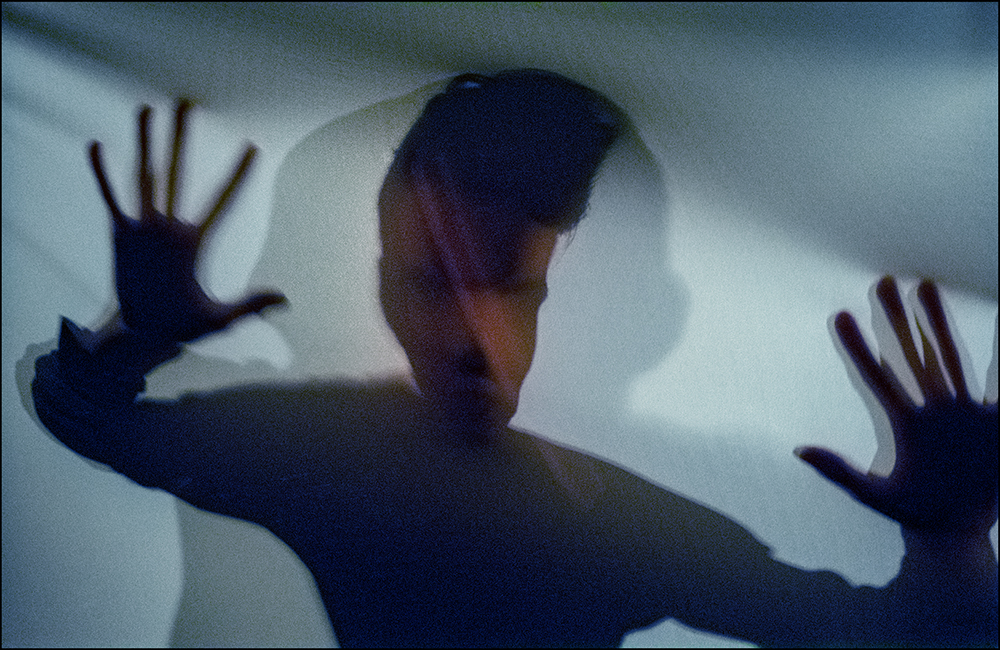
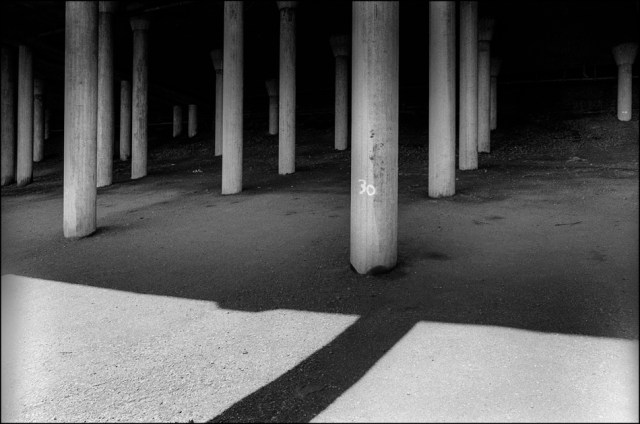
Photograph: ©JStadnicki, 2018

There is no way one can observe the social transformations within a community and society without resorting to strong political clues in order to understand the sources of those transformations. And clearly, when things go wrong, we blame the politics, the legislators, the government. But when the political sphere moves away from the reality of the people it represents, the laws and the policies have no real impact on the wide majority. The decision-making groups have little will to support change, and the economic downturn Britain has been experiencing for over a decade seems to move towards a silent collapse. And nobody appears to take responsibility. The blame placed on the government rules like a shadow, hiding underneath the roots of bad financial decisions, personal greed and managerial incompetence.

Let’s consider the situation the art sector is in at the moment.  The issue came into focus with the news of the devastating fire which, this second time, damaged the Glasgow School of Art beyond repair. There you have £35m down the drain, or rather turned to ashes, and everybody is powerlessly looking at the building asking, in disbelief, ‘how could this be possible’. The fate of the Glasgow School of Art seems, for now at least, sealed by confusion and uncertainty. Who is to blame?

Extrapolating the Glasgow tragedy, we are looking for someone or something to blame for the uncertain fate of hundreds of art schools across the country, which slowly, but surely, are decapitated by unachievable targets and percentages. This time, we encounter another type of devastating fire, which is slowly cooking to ashes the art sector, in general, and the art education, in particular: the drive to achieve the funding targets, the attendance and the achievement rates, the literacy and the numeracy benchmarks. What do they all mean? Certainly, they mean nothing to those involved in the art sector (students, artists, writers, musicians, teachers), but mean everything to those in charge to justify the bureaucracy supporting their livelihoods; bureaucracy which satisfies the pleiades of regulators and inspectors. The focus of this type of education is not the youth’s creativity; it is to produce a nation of self-absorbed adults, ready to slot into whatever social square is allocated to them as soon as they join the education system.

And here we face again another type of politics. The ‘politics of inevitability’ as Snyder eloquently describes it, which makes the art education vulnerable and a victim of the constantly expanding globalisation. Since the mid ‘80s, the way we talk about art has fundamentally changed as well as the way the education system works to serve the economy, under the bright colours of neoliberalism.  One would say, what is the problem with that? There is nothing wrong with expecting profitability, and economic success. There is, though, if the principle on which the profit is based, is wrong.

The education and the arts remain essential social institutions  in a healthy society. They create and preserve what we call our ‘decency’. They remain our ‘sane barometer’ if you like, which supports the configuration of our future and the values this future will act upon.

I remember a recent conversation I had with a head of school who recognised that things have taken a turn for the worse, with the Brexit uncertainty looming, but, as he said, ‘what can one do against a whole government, with a mortgage to pay?’

Here we are again, in the blaming game equation. The well-suited head is back in his leather chair, the young artist is back revising for another maths test. New financial cuts are drowning the hope of an economic recovery and the silence of those suffering its effects sounds more and more like a resigned agreement. Not once we feel that the history allows us to see patterns and to understand that action is a possibility.

History permits us, ‘to be responsible; not for everything, but for something’ as the poet Czeslaw Milosz said. This responsibility has always worked against loneliness and indifference.

©Maria Stadnicka, June 2018, Gloucestershire, UK


Wales. Time spent somewhere other than here.

This slideshow requires JavaScript.

‘It is unfortunately hard to recall our quasi-permanent concern with the future, for on our return from a place, perhaps the first thing to disappear from memory is just how much of the past we spent dwelling on what was to come; how much of it, that is, we spent somewhere other than where we were.’  (de Botton, 2002)

Photography: ©John Stadnicki, 2018

Mickey Mouse at the royal wedding, International Times


Live interview with Mikey Mouse, @International Times

©Maria Stadnicka, May 2018

The Burden of an Exit Strategy

image

The confusing scandal around Cambridge Analytica and the misuse of personal data have stirred a wide search for a coping strategy post Facebook, once the campaign #Delete started to gather momentum. Over fifty million people have become victims of an algorithm and the finger points in both directions. It points at the corporation and the guilty pact between the rich and the political class to maintain ‘the distribution of wealth’ (Chomsky). And it points at the victims too, as they gave into temptation and filled in the vilified personality test, the intelligence test, the ‘what Disney character are you’ test or ‘is the dress white or gold’ test. And the list could include other hundreds of tests and surveys which were strategically used to collect data and profile the population.

But why did people take the online tests in the first place? Was it out of curiosity, boredom, self-absorption, confusion, insecurity? Possibly, but not exhaustively, being constantly overfed information, the individual, the person behind the computer screen, started to lose the sense of identity and the fear of rejection kept on creeping in. A sign of an increasing collective anxiety.

The need for constant external validation could be a symptom of what de Botton calls ‘status anxiety’. But this is not, by far, a new philosophical discovery. In 1929, Bernays used collective anxiety in his campaign ‘Torches of Freedom’ and successfully convinced women to start smoking cigarettes. One can only see that psychological profiling started a long time ago, when Sigmund Freud clarified the notion of a dark, unconscious self. It comes as no surprise now that among my friends without online social presence there is a sense of ‘told you so’ vindication, whilst the rest is struggling to find a way out.

On a tweet published yesterday by a friend I read a stark and final confession: ‘took a while to decide, but happy I finally cleansed myself. After 11 years I am off…forever.’ But have they actually managed to escape with such ease? Is ‘deleting’ as simple as ‘liking’ or ‘accepting’ the terms and conditions of a virtual contract? There are two immediate identifiable issues here.

The first is that the Facebook license does not end upon the deactivation of your account. The content will only be released from license when all the other users (family, friends, acquaintances, nobodies) have also broken their ties with it. Online freedom will come only after successful negotiations with thousands of friends one gathered during a decade of social media use. The second issue is that Twitter, the online space the online user migrated towards, has a more insidious ‘rights’ clauses. In accepting the terms and conditions, they granted the platform editing rights. Which means the right to edit, modify, translate and format any content posted on the platform. And this can be highly problematic when the content is translated to other languages.

The society’s architecture has dramatically changed to redefine the concept of freedom within the limits of an acceptable platform. It is now symptomatic that ‘deleting’ is a form of virtual social rejection, which leads to real constrains in terms of access to information. But, a while ago, this free access used to be a fundamental attribute of a healthy democracy.

‘The concept of liberty and individual choice are nothing but a mirage’ notes an online user on Twitter who admits that ‘today, Facebook deleted my account because I did use the title DeleteFacebook in one of my paintings’ (TArt). The elite culture is openly biting back displaying the fangs of bigotry ‘as it pretends there is no other alternative’ (Berger).
What facets do we need to explore now in order to redesign our ‘spectre of hope’?

Maria Stadnicka, 1st April 2018

The Pink Chernobyl

‘Poetry at Pembroke’ is a series of poetry readings organised by Peter King, lecturer in philosophy at Pembroke College. The beautiful grounds bring together a wide range of national and international poets, readers, critics, musicians, students, on Mondays at 6pm.

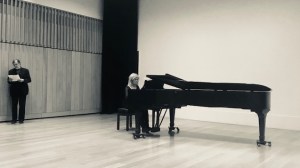
With great joy and enthusiasm, I will be performing at Pembroke on Monday 19th February, at 6pm with the composer Janet Davey.

Janet Davey and Peter J. King performing at Pembroke College, 2017.

Janet and I have a few things in common. Radio broadcasting. Both involved in news. Janet worked for the BBC World Service, I worked for Radio Europa Nova and then for Radio Hit Romania. We share the love for music, for poetry and for sound. And we share a common memory. The Chernobyl accident 26th April 1986. I was eight years old and went to a nearby gymnasium school. 26th April 1986 was a Saturday. In those days, we went to school six days a week and, on Sundays, we had homework. There was nothing else for us children to do. We had no television during communism, there were no magazines and we had only two newspapers. I had started to write poetry by that time; write on old notebooks, on my mother’s factory coupons, on food wrapping paper. We had no books at home, so I wrote to have something to read in the evenings.

Once a month after that Saturday, the school’s paediatrician would come to deliver our iodine tablets quota. We had to swallow one every day for almost a year. We kept breathing and eating and learning and sleeping and growing, not knowing why the iodine was good for us. The boys mostly played with the sweetish small tablets or used them as crayons. I was a short-haired nervous girl. Shy and small for my age, and I think I took them all, with precision. Or maybe for fear of being publicly reprimanded during political propaganda lessons we had on Wednesdays.

Around the same time, Janet was in London producing a live telephone programme, with Sue MacGregor between London and Moscow for BBC World Service and BBC R4. Jan noticed on the “wires” a cloud over Finland and more. The interviewee, set up by Jan, was Georgi Arbatov, Soviet spokesperson. He was asked about this cloud……and told the world. The rest is history.

These two journeys met 31 years later. The composer Janet Davey and I will be performing at ‘Poetry in the Pink’. I will be reading from my collection ‘Imperfect’ published by Yew Tree Press (Philip Rush) and the forthcoming book ‘Uranium Bullets’, with original piano music and orchestration produced by Janet Davey’s grace.

Thank you, Peter King for your brilliance in promoting poetry and thank you, Janet Davey for your superb music.

The event takes place at Mary Hyde Eccles Room, Pembroke College, OX1 1DW.
Monday, 19 February 2018, at 6pm. 
Free entry and books available!

Restitutio

A new poem published this morning in ‘Stride’ magazine:

Photograph: @John Stadnicki – MMXVIII

I covered my face with black ink
rounded all my possessions up
and set fire to everything
at the top of a hill.

click here to read the full text.


Takeaway

Photography: ©International Times, 2018

(to Aidan Semmens)

Hello. I am a feature
on a CCTV camera, with
private resonance. At
the top floor, I
can barely sleep for the sound of gunfire.
I hear the poetry when I order a pizza.

Still there, are you?
…‘yeah, […published in ‘International Times’ to read click] here

Selfie(sh) Culture

Study I, 2018

Study II, 2018


Study IV, 2018

Study III, 2018


Study VI, 2018

Study V, 2018


Photography: ©John Stadnicki, 2018

Man versus Institution – the Narrative of Despair

Photograph: ©John Stadnicki 2018

In recent months, I have been visiting my local surgery on a weekly basis and it has become a matter of routine to book visits and then wait my turn to be seen and checked. A matter of luck to have so many appointments, but not so lucky to have to report the effects all this prescribed medication have on me and then to find out that everything has been recorded, that the doctor has noticed if I washed my hair or not, or if I wear black, too much of it, or if I smiled or not. But then who cares anyway. I am the number written in all my medical history and my number defines my apprehension to allergies and infections.

It is the flu season, therefore busy. This morning a woman takes her nail file from her handbag and finishes her manicure just before she is called in. A man in his thirties, in a dark grey suit, with muddy brogues, on the phone with someone called Helen organises his daily appointments. The person sitting next to me finishes a BLT and wipes his hands on my chair then keeps on texting.  The waiting room, packed. At 11 o’clock, twenty-two people in waiting, talking, texting, arguing, having coffee. Busier here than the bus station just across the road. And these people, most of them, look lonely. And for this, we now have a new solution and a new scope.

This week the Cabinet announced a new appointment. A minister for loneliness in response to a documented increase in mental health cases, to a reported sense of disconnection and social isolation. According to figures published by The Guardian, we are talking here about nine million people, which is a significant slice of loneliness in the British society. Furthermore, NHS Digital shows that prescriptions for antidepressants reached an all-time high with over 64 million items dispensed in 2016. And this represents a massive 108.5% increase in a period of ten years.

This is a clear indication that we now institutionalise loneliness spending billions on pharmaceutical companies when very few alternative solutions are available to the local communities. We witness a serious lack of professional support for people suffering from mental health issues, although it is statistically recognised that one person in five is affected, at some point in their life, by mental health issues. Yes, about the time to do something about it. But what the government is choosing to do is to add to the amount of bureaucratic garbage the ministerial departments produce on a weekly basis, without concrete results or impact at the deeper levels of our society. Let’s talk further numbers.

A minister cashes in over £141,000 a year, without bonuses, travel and communication expenses, without the support staff and other technological aids. You could double or triple the sum and easily get over the half a million threshold. A mental health nurse’s annual income, at the beginning of their career, barely touches £22,000. My local surgery, or others across the UK, could easily benefit from employing further ten newly qualified nurses or a few therapists. I live in a small community where resources are stretched and stretched further and where, at times, waiting for hours to be seen by a practitioner has become an acceptable rule.

Who benefits from a new ministerial portfolio when it is historically demonstrated that no institution has ever protected the individual, when, actually, the institution is there to protect itself through complicity to a policy of silence against corruption, error and monetary gains?

I want a Ministry of Despair!

©Maria Stadnicka, 2018