Landscape with Buses


On both sides of the frontline,

orchards in bloom.

People buy and sell goods,

occupy central squares,

dogs run after barefoot children

with grain baskets – linen flags.

Buses on schedule, taxis in queue.


Business as usual.

Gunshots, grenades, mortars.


Stray barks come out of houses

with blown-up windows. Splinters

rising – morning’s canines.

Soldiers wake up to the call to prayer,

switch radio on, shave by the roadside.

Nametags rest in shoe polish tins,

heat bakes bread already sliced.

Buses carry wounded further inland.


Poem published in Sweat, Ink and Tears, 8th Jan. 2019, available here.

©Maria Stadnicka, 2019

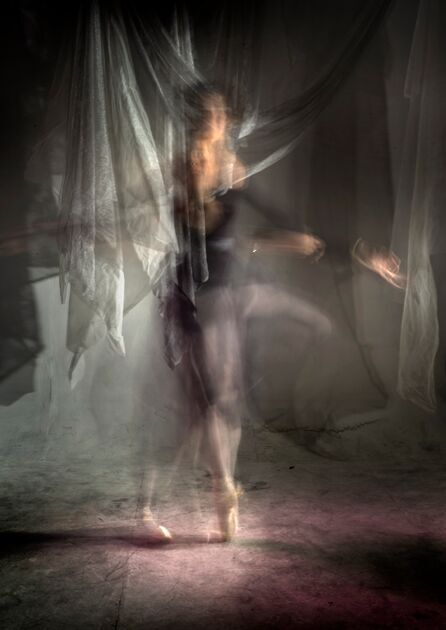
Bolshoi Rehearsal

Photography: ©JStadnicki, ‘Studio’ 2018


53.2. Numbers blink, red dots on scales

show my thighs have grown

by two-hundred grams. I open the window.

Adverts for drama productions hang across skies,

a heavy woman squeezes against glass

to make room for me.


For lunch, I swallow crushed ice,

wood shavings, a full glass of tap water;

jump on the treadmill: thirty-eight minutes,

three-point-two miles, three hundred calories.

Lost two-hundred grams.


A neighbour rings, invites me to dinner

saying the man living at number four died

hit by a bus on the way to the gym.

He was 73 kilos. I am 53.


I stop eating protein, google public transport

routes, pick-up times for stones-pounds.

Every day at 9:45, a stout driver reminds passengers:

‘No hot food at the back. Only light snacks.’


Indoors. Drawing jogging maps

on steaming shower curtains.

Shampoo waves on my striped ribcage.

Sea splashes away in the bathroom.

Sand grains hide in my shoe.


©Maria Stadnicka, 2018

Stroud Book Festival Poetry Night, 9th November, 7.30pm

The Stroud Book Festival is thrilled to once again be hosting an eclectic line-up of poets and poetry from Gloucestershire and beyond.

The first poet on the bill is multi-award-winning poet and broadcaster, Daljit Nagra, on Thursday 8th November at Wycliffe College, one of the festival’s splendid sponsors. Nagra, who was the first ever poet in residence at BBC Radio 4, will be reading from his latest book, ‘British Museum’, as well as earlier books, including the Forward Prize-winning ‘Yes We Have Coming to Dover!’

“He’s a marvellous reader of his work,” says Adam Horovitz, who will be introducing him on the night, “and his questing, questioning, witty and politically pertinent poems are well worth discovering aloud as well as on the page.”

On Friday 9th November, the Stroud Book festival Poetry Night offers up a wonderfully varied and immersive evening of readings, performance and music by a hand-picked bill of acclaimed poets, in two parts.

The first part brings together three poets with Gloucestershire connections: Kate Carruthers Thomas, Patrick Mackie and Maria Stadnicka. It closes with acclaimed Welsh poet and singer Paul Henry and will be compered by Adam Horovitz.

“On Saturday 10th November we’ll be celebrating the work of Gloucestershire poet and composer Ivor Gurney with a one-woman show starring writer and actor Jan Carey, to mark the 100th anniversary of the end of World War One,” says the festival’s artistic director Caroline Sanderson. “Author, Composer, Soldier-of-a-sort: The Life and Work of Ivor Gurney is fresh from an acclaimed run at the Edinburgh Fringe this summer and we are delighted to bring the show to Stroud.

“We round off our poetry programme on Sunday 11th November with a magical family event inspired by nature,” adds Caroline. “We hope that children of all ages will come and meet Frann Preston Gannon, illustrator of the poetry anthology I-am-the-seed-that-grew-the-tree.

“It’s a glorious new gift anthology of 365 nature poems for children, spanning over 400 years of poetry, and including the work of poets as diverse as William Blake, Roger McGough, Carol Ann Duffy, John Agard, Eleanor Farjeon and William Wordsworth. As well as a chance to enjoy the poetry-telling, Frann will be encouraging children aged 6 and above to create and illustrate their very own nature poem.”

How to book tickets:

In person: at The Subscription Rooms, Stroud

By phone: by calling 01453 760900

Online at https://stroudbookfestival.org.uk

Hollow Wean


Dear Sir,

a beauty company sent me an email,

‘We win, you win’ it said, invited me

to purchase youth serum at half price.

There is something I hate about emails

sitting black on white on screen:

comma after verb easily mistaken for

philosophical pause or breath taken

when reading poems aloud.

‘Please, do not reply’

it carried on ‘we hope to see you again.’

I have a hundred things to do but

rush to the bathroom to see how deep

the line cutting my glabellar region

has grown since I last checked.

A fair amount I notice. Others joined

the frontal network, showing people

how much I’ve won in forty years

of living too small, dreaming too big.


©Maria Stadnicka, 2018


Poetics

©International Times, 2018


I had a disagreement with a poetry master
about wolves. And talking made me think
that I, too, had the same great fear
of living forever, but said nothing.

I remained held up by my feet and a tree
came out of my mouth. It hurt badly.
More than a lost war, more than lies.

The poet moved to the left, locked himself
in a room with many doors but no handles.
Outside, his wolf guarded meat-eating days.

Mine wanted to jump from a cloud
straight into the blank page, but waited.
A child passed by and said to me
that wolves did not exist on paper. Only in flesh.

Text published in ‘International Times.’

©Maria Stadnicka, 2018

Your Stripes Represent My Future


There are a few things I don’t care about. And one of them is which royal is going to give birth to which royal. As my friend, Mickey Mouse, used to say in his song…

I remember you was conflictin’/

in a black dress under a white coat /

and I fought /

that face I’ve seen somewhere else /

in a movie about the abuse of power. 

La, la, la, la, la, lah! 

Those around me keep on running /

I stand and convince myself /

the stripes I’ve got represent my past /

but yours /

represent my future. 

La, la, la, la, la, lah! 

No chance in the doggy-doggy fight /

I’m convinced /

that dress is bullet proof

I’m convinced it’s against repetition

and revolution and honesty.

That dress is against me, babe!

Further information, in International Times.

Image

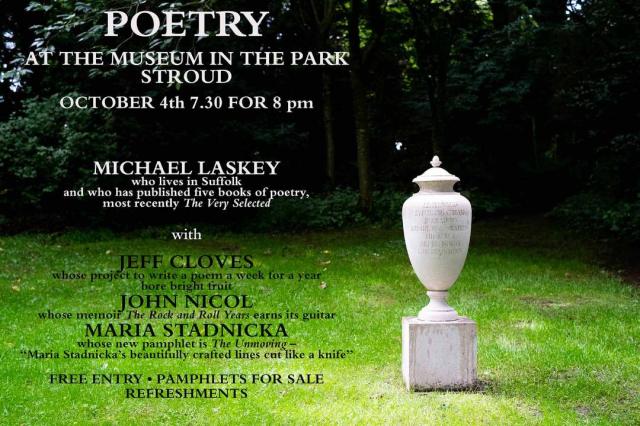
New Poetry Season / The Museum in the Park

EVENFALL – The Narrative of a Sound

I finally met the musician Andrew Heath in 2017 at the launch of my book Imperfect having previously written a few poems inspired by his third album Europa. His music talks in a quiet, subtle voice about the changing world around us, it points out the fine details of a moment of silent reflection, a moment which only requires one to be still and to observe. The colours, the speed, the flight, the descent, the little fragments of life.

Andrew Heath performing at The Seventh Wave Festival. 2017. Blue Orange Theatre. Birmingham. U.K. Photo: © Alexander Caminada, 2017

Andrew Heath has spent over twenty years producing and composing experimental music. He has collaborated with Peter Maynard (Dust and Threshold, 2016, Disco Gecko Recordings, UK), the legendary musician Hans-Joachim Roedelius  and the composer Christopher Chaplin (Triptych in Blue, 2017, Disco Gecko Recordings, UK), the Dutch guitarist Anne Chris Bakker (Lichtzen, 2017, White Paddy Mountain, Japan) and he is currently working on a joint project with the Mercury Award nominated Toby Marks (Banco de Gaia).

A few months ago, Andrew invited me to collaborate towards his fifth solo album Evenfall due to be released later on this year. Several weeks after we completed the recording, inspired by the subtlety of his new album, I went back to his studio in Stroud and invited him to talk about his fascination with silences and with pauses. Over many cups of freshly brewed coffee we talked about the way we experience the world, through rhythm and speed, but Andrew explained how one could transform a world with only one sound.

Recording the scissors

MS: Would you place your music within the limits of a particular genre?

AH: As my music has developed, it seems to occupy different spaces. There are many names for this musical area I feel drawn to. Some call it ‘ambient’ but this is quite a broad term. I prefer to use words like ‘lower-case’, ‘quiet’, music without beats and without words and, I know people would then ask what is left but of course to me, the answer is, everything is left.

I became aware of music through listening to the world around me as a very young boy and one of my prized memories and an important formative sound moment in my life, was when my father came home from work with an old reel-to-reel tape machine. I was intrigued to discover I could record sounds on it and play them at different speeds, or turn the tape over and play it backwards. I had a microphone which I’d started using and I remember recording the sound of a pair of dressmaking scissors my mother had. When I played the recording back and slowed it right down it sounded like somebody had drawn a sword. From that moment, recording and transforming sound was something I would be constantly drawn to.

Andrew Heath. Stroud. Gloucestershire. U.K. Photo: © Alexander Caminada

MS: In terms of influences and directions…?

AH: Many things but certainly other musicians and their work. I am inspired by the American pianist Harold Budd, who worked with Brian Eno. I love his sense of timing. His playing is like notes falling downstairs, they just cascade in a beautifully ad-hoc way. I’m very interested in other experimental musicians like Roedelius and the Japanese sound artist, Sawako. An exciting recent discovery for me is German YouTuber, Hainbach who works a great deal with tape, and due to his music, I’ve begun using dictaphones which is an interesting new development for me. However, I think the biggest influence is the environment. The sound around us is music. It could be the song of a bird, which is very beautiful, but for me it can also be planes, my fridge makes amazing sounds. Any noises from our inside or outside spaces.

MS: Are you trying to make people aware of what surrounds us or is your music a product of your own reflection about the world and the passing of time?

AH: I am not trying to educate an audience but this is very personal music. Like an artist who is process lead, I am very interested in taking ‘found’ raw material from the environment around me and then processing and ‘treating’ these recordings building layer upon layer of sound. In my case, the pigments that I use are the piano, guitar and ‘found’ sounds. Where an artist will choose a brush, a pencil or a knife, I will use computers, software and tape.

Spaces between notes

MS: You use ‘found’ sounds as you call them, ‘raw materials’ from nature, being open to the randomness around you, but then you process it using technology.

AH: Yes, true, but I am being selective on the technology I use though or approve of. For me, the fascination of transforming, changing, processing sounds is all consuming and you can’t do that without technology – typically very modern technology. I start with just a few sounds, listen to the interaction between them, go down the rabbit hole and realise suddenly, I have the beginnings of an idea.

In my sound world, I try to find and then follow a path, as I go along, I become a collector of things. It could be a piece of wood, a stick, a stone and put them in my imaginary backpack. But then, as I build it up and up and up I realise that it becomes heavy and I leave stuff behind. I leave spaces between notes to reach an equilibrium.

MS: I understand that when you start to work on an album it can begin with something random. What inspired the album Evenfall

AH: I was deep in the Norfolk countryside – a real wilderness area with little woods and lakes. I was interested in making longer field recordings. I stood there recording in one place for about two hours. And it got darker and darker and darker. It started to rain. It was a magic moment of stillness that really informed the music on Evenfall.

To add to the magic, I must mention the amazing contribution from the young musician Lydia Kenny, Gloucestershire Young Musician of the Year 2018 who so kindly gifted me such beautiful soprano saxophone lines on the title track, ‘The Still of Evenfall’.

MS: When will the album be available and what follows for you this year?

AH: The album will be launched by Disco Gecko Recordings on 21st September 2018 at The Old Church, London and it will be available on ITunes, Spotify, Amazon as well as in CD format. Prior to this, I will be performing with Toby Marks at Extreme Chill Festival, Reykjavik, Iceland, 6-9 September 2018.

©Maria Stadnicka, 2018

Carrying the World

A chisel, a hammer, a lyre; reportage, intimate feelings, quips and criticisms. Maria Stadnicka’s poems are clusters of consciousness, graphic, material images of our world. Her language assaults, bends, cajoles, thrusts a saber into the darkness of the very language she employs to explore death, degradation, the non-recognition of the human individual, war, urban violence, in short, the all-too-present context of our daily lives. Is there an element of grace, a lyrical thread, an invocation of human beauty? Yes, if one can continue to believe in this beauty while contemplating the profound alienation and marginalization that characterizes contemporary Western societies.

Although Stadnicka writes in English, her native language, Romanian, is always close to the surface of the words, forging and sculpting the associations that create the poems’ presence. Her language mirrors the human mind, elliptical at times, obsessional from time to time, fragile and reflective when the moments present themselves. ‘A moon of salt unravels / the shadow between years, / unfolding a passage / grey chapter about mortality’ offers a lyrical entrance to the book. The reader moves swiftly into the core of Stadnicka’s vision, ‘the wounds of freedom’.

One of the most beautiful poems in the book is ‘Restituto’. Transformation of thought and body occurs as the voice of the poem articulates the ars poetica, an incendiary gesture born out of an already-condemned historical contex:

I covered my face with black ink
rounded all my possessions up
set fire to everything.

The gods hid in a poem
with a fresh loaf.

Just us now slicing away
to the end of my days.

What concerns Maria Stadnicka? How do these strangely forced collages that are hermetic and yet entirely exposed allow the reader entrance to her world? She is speaking about the discontinuity of personal space and the intrusion of economic and political forces in an individual’s life that leads to fragmentation and, ultimately, to the dissolution of one’s reality. The chance for the existence of a future or even the future is removed. Literature becomes the communication and solidarity that permit the step towards wholeness. In Stadnicka’s poems social, personal, and literary landscapes are fused and at times must be forcibly dislocated, both repositioned and torn apart, so that one can continue. The reader is drawn to the quote from Czeslaw Milosz that frames the book: ‘So much guilt behind them and such beauty!’

The title poem, ‘The Unmoving’, dislocates the predictability of images and pulls together the motifs of Stadnicka’s poetry. A book slips, the world is seen as ‘a time-capsule sent flying into space’, a missile wakes the ‘half-dreaming’ narrator, someone is walking down the motorway, people materialize with a dog for sale, ‘The music absorbed what was left of Rana Plaza’ and the reader is once again confronted with the Savor Building collapse that killed 1,134 people in Bangladesh. The narrator is displaced and ‘The ground settled between reference points.’

In a sense, The Unmoving is a defense of the marginalized, the poor, the displaced and disabled. The poems create a sense of urgency and mystery. The only escape from the imposed absolute of non-being is resolution to go forward illogically and irrationally free. ‘For the first time, I / walked. Blind, absent. / I became tomorrow.’

@Andrea Moorhead, 2018

Review published in ‘Stride Magazine’.

‘The Unmoving’ is available here.

Gallery

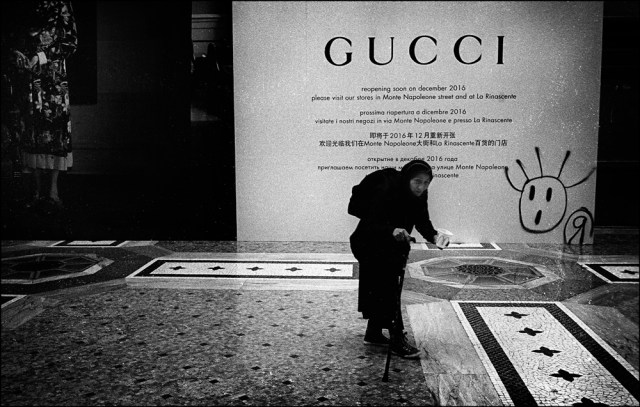
Economy

Photography: ©JStadnicki, 2018

This slideshow requires JavaScript.